Google
How Do You Get Better Internet In Dallas TX: 5 Simple Steps

How Do You Get Better Internet In Dallas TX: 5 Simple Steps


You can boost your connection quickly by following five clear steps that put you in control. Learn how to run a speed test, choose fiber or cable, position your router, update equipment, and negotiate with ISPs to get better internet in Dallas TX. These actions help you reduce lag and secure fast broadband for work and streaming, providing you with reliable internet in Dallas, TX. We at Skylink WiFi are here to provide smart tips so your home runs smoothly with internet in Dallas TX.
better internet in dallas 5 simple steps nsq

Assessing Your Current Internet Setup

Run a series of speed tests from a wired device and over WiFi to capture download, upload, and latency differences; note your router model, wiring age, and where outages occur. Compare your results to your plan to see if you’re getting promised rates. If you live in neighborhoods with fiber builds, availability can jump from 100 Mbps cable plans to 1 Gbps fiber. These checks provide a clear picture of your internet performance in Dallas, TX, and identify areas where upgrades are necessary.

Identifying Your Needs

List your devices, simultaneous users, and tasks—video calls, 4K streaming, cloud backups, online gaming—and match them to speeds: ~25 Mbps per 4K stream, 5–10 Mbps per HD stream, and 50–200 Mbps for heavy work-from-home households. Note your peak hours and remote job needs so you can choose the right tier. Use this target bandwidth when comparing options and record it before calling providers about internet plans in Dallas, TX.

Evaluating Your Current Provider

Compare your plan’s advertised speed to your real-world tests, check for data caps, throttling policies, and average outage times; read local reviews and FCC complaint data. Ask neighbors about AT&T Fiber, Spectrum, or T‑Mobile Home Internet availability in your ZIP code and confirm modem compatibility and rental fees. Use the provider’s speed guarantees to demand fixes—many Dallas neighborhoods now have multiple high-speed options, so consider switching or upgrading if the service lags behind the advertised internet speed in Dallas, TX.

Run tests at different times (weekday morning and 7–11 pm peak) to see congestion; record your upload rates and jitter—aim for latency under 30 ms and packet loss below 1% for games and video calls. Check if your modem supports DOCSIS 3.1 or a fiber ONT, tally monthly rental fees and contract termination charges, then call with your data to negotiate credits, faster tiers, or waived install fees before you decide to switch.


Exploring High-Speed Options

Fiber lines deliver the fastest real-world performance—often 300 Mbps to 2 Gbps from AT&T and other local carriers—while cable typically runs 100–1,000 Mbps through providers; 5G and fixed wireless commonly land between 50–300 Mbps, and satellite internet providers range lower with higher latency. You can choose multi-gig fiber for heavy uploads, cable for steady downloads on a budget, or 5G for quick setup and mobility, depending on your neighborhood and internet needs in Dallas, TX.

Comparing Different Internet Types

Fiber gives symmetrical upload/download speeds and low latency, ideal if you stream 4K, run video calls, or host small servers; cable offers strong download speed but variable peak-hour performance; DSL often sits around 10–100 Mbps and depends on copper distance; 5G and fixed wireless are fast where towers are dense; satellite reaches remote spots but shows higher ping and possible data caps.

  • Fiber: best for uploads, gaming, and consistent 4K streaming.
  • Cable: strong downloads and widely available in urban areas.
  • DSL: reliable in older neighborhoods but lower top speeds.
  • 5G/Fixed Wireless: fast setup, speed varies by tower load and location.
  • Any option should match your device count, peak usage times, and budget.
Fiber Symmetrical 100 Mbps–2+ Gbps; lowest latency and best for uploads.
Cable 100–1,000 Mbps; high download speed, slower uploads and peak-time variance.
DSL 10–100 Mbps; distance-sensitive, widely available in older blocks.
5G / Fixed Wireless 50–300 Mbps; quick installs, coverage depends on tower density.
Satellite 25–150 Mbps; broad coverage, higher latency and potential data caps.

Understanding Availability in Dallas TX

Coverage shifts block by block, so you should check provider maps and enter your address to see true options; AT&T Fiber and Spectrum cover many neighborhoods, while newer fiber builds appear in places like Oak Lawn and parts of East Dallas. Outskirts often rely on fixed wireless or satellite—use address checks to confirm exact availability for internet in Dallas TX.

Call local provider offices for rollout timetables, consult the FCC broadband map for a baseline, and ask neighbors about recent installs; joining interest lists or community push campaigns can accelerate fiber deployment, compare installation fees and contract terms, and test wireless signal strength on site before committing to a plan for reliable internet in Dallas TX.

Negotiating with Providers

Gather your bill, current speeds, and competitor quotes before you call. Tell the rep you want a better deal and note you’ve seen lower offers for internet in Dallas TX; state a target price — for example $40–60 for 300–500 Mbps — then ask for retention promos, waived installation or modem fees, and a price lock or prorated credit if switching is imminent.

Strategies for Discussing Pricing

Start with a clear ask: request a fixed-dollar discount, a 20–40% promo, or a guaranteed rate for 12 months. Point out your current bill math and say you’ll consider termination if the price remains high; bring up billing dates and request backdated credits if a recent hike occurred. Mentioning the competition often prompts reps to check retention deals.

Leveraging Competitor Offers

Bring screenshots or PDFs of AT&T Fiber, Spectrum, or regional carrier deals and ask the rep to match or beat them by $10–20 monthly. Tell them you prefer to stay but need equivalent speed and price; ask for written confirmation of any concession, including promo length and early termination fee waivers. Saying you’ll switch to alternatives gives you leverage.

Use the competitor quote as leverage by emailing customer service and then phoning retention if needed; many customers in Uptown have gotten providers to match offers and waive installation when presented with a dated promo. You should obtain a written order number, a clear start date for the new rate, and confirmation that hardware or activation fees have been removed before canceling any service to avoid surprises with Dallas internet transfers.


Enhancing Your Home Network

Scan your home for dead zones using a phone app and note where speeds drop below your plan’s advertised range of 100–1000 Mbps. Run Ethernet cables to smart TVs and gaming consoles for stable connections. You can set QoS to prioritize video calls, create a guest SSID for visitors, and place the router away from metal and thick walls. After testing, compare your results to your internet in Dallas TX plan before spending on new gear.

Upgrading Your Equipment

Swap an old 802.11n router for a WiFi 6 (802.11ax) model like the Asus RT‑AX86U or TP‑Link Archer AX50, and use a DOCSIS 3.1 modem for cable plans or the proper ONT for fiber. Mesh systems such as eero Pro 6 or Google Nest help homes over 2,000 sq ft. Match your hardware to the speeds your ISP advertises so you actually get the bandwidth you pay for.

Optimizing WiFi Speeds

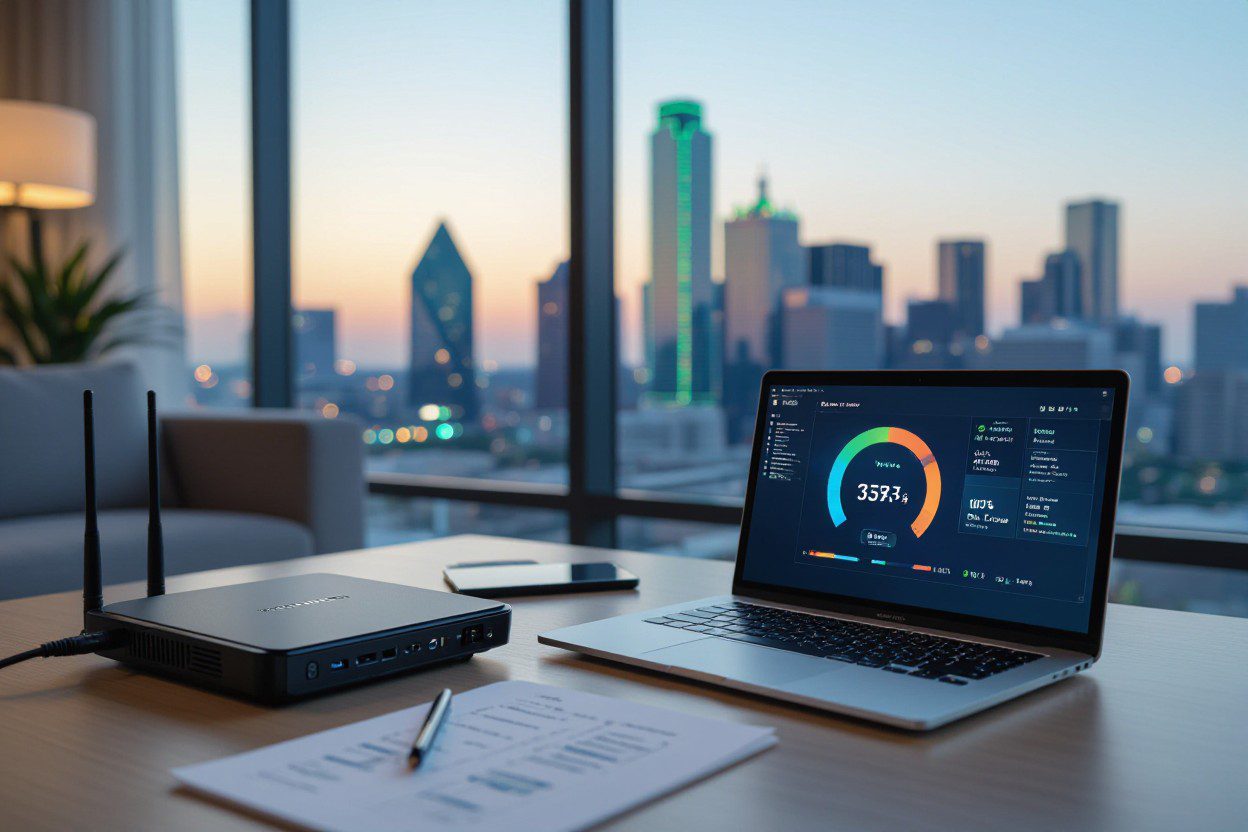
Place the router centrally, 4–6 feet off the floor, and keep it away from microwaves and baby monitors; use 5 GHz for streaming and 2.4 GHz for range. Set 2.4 GHz to channels 1, 6, or 11 and use 80 MHz on 5 GHz when neighbors aren’t congested. Run speed tests in each room and adjust channel width or enable QoS if peak rates fall short of your internet in Dallas TX plan.

Use a WiFi analyzer (NetSpot, WiFi Analyzer) to map interference and pick the clearest channels; enable beamforming and MU‑MIMO on compatible routers. For multi‑story homes, use wire mesh nodes with Ethernet backhaul or use powerline adapters as a fallback. Update firmware monthly, enable WPA3 security, and test download/upload at peak hours to see how Dallas internet congestion affects your speeds.
 

better internet in dallas 5 simple steps evu

Staying Informed on Internet Trends

Watch provider announcements, FCC filings, and local press to spot upgrades and outages; you can use the FCC broadband map and sites like BroadbandNow to compare reports. Expect fiber and 5G fixed wireless to continue expanding, with many providers now offering 1 Gbps plans and higher. Tracking these sources helps you time switches and upgrades to improve your internet in Dallas TX.

Keeping Up with Local Developments

Scan Dallas City Council agendas, public works permit logs, and neighborhood groups on Nextdoor or Facebook to catch planned fiber rolls or utility pole work. You can subscribe to the Dallas Morning News tech feed or sign up for ISP newsletters from AT&T and Spectrum for neighborhood-specific notices and outage alerts.

Watching for Infrastructure Improvements

Track construction signs, new telecom crews, and pole replacement projects that often signal upcoming fiber builds; contractors typically file permits before crews arrive. Use the city permit portal and state utility notifications to see where crews will install conduit or aerial strand, helping you predict when faster Dallas internet will reach your block and which providers may follow.

Drill down by checking municipal permit IDs and contacting the city broadband liaison to confirm timelines; permit entries usually list scope—underground conduit, aerial strand, or handhole work—and estimated completion dates. Compare permit addresses against ISP expansion maps and call provider build-out hotlines to ask about availability windows for internet in Dallas TX and alternative interim options like 5G fixed wireless where fiber rollout is delayed.


Wrapping Things Up

To get better internet in Dallas TX you should compare providers, choose fiber or cable plans, upgrade your router, and optimize your home network. Doing these steps helps you find the best options and boost speeds. If you shop for local deals and test speeds, your internet will be more reliable for streaming and work. Finally, contact providers about full-fiber network availability to secure the fastest internet in Dallas, TX, and lock in a plan that fits your needs. Here at Skylink WiFi, we are committed to helping you find the right solutions for your home.


FAQs

Q: How can I tell if my current internet speed is good enough?

A: You should run a speed test from a wired connection to get a baseline and compare it against your plan’s advertised speeds. A good connection for one person may not be enough for a family. For example, a household with multiple users who stream 4K video, game online, or work from home will need at least 100-200 Mbps to avoid lag. Our guide explains how to match your speed needs to your usage patterns.

Q: What’s the main difference between fiber and cable internet in Dallas TX?

A: Fiber internet uses light signals for fast, symmetrical speeds (equal download and upload), and is best for heavy usage like video conferencing and gaming. Cable internet utilizes coaxial cables and typically offers fast download speeds but slower upload speeds, with performance that can fluctuate during peak hours. Availability for both types of service can vary significantly by neighborhood in Dallas.

Q: How can I improve my WiFi speed and signal at home?

A: Start by placing your router in a central, elevated location away from thick walls and appliances. For older equipment, consider upgrading to a WiFi 6 router. Using a mesh WiFi system can eliminate dead spots in larger homes. You can also connect devices like smart TVs and gaming consoles directly with an Ethernet cable to free up WiFi bandwidth for other devices.

Q: Is fiber internet available everywhere in Dallas?

A: No, while fiber networks are expanding rapidly in Dallas, they are not yet available everywhere. You need to check availability by entering your specific address on provider websites like AT&T’s or using third-party tools like the FCC broadband map. Some Dallas neighborhoods have multiple fiber options, while others may still rely on cable, DSL, or fixed wireless.

Q: How can I negotiate for a better price on my internet bill?

A: Call your current provider’s retention department with a clear ask for a lower rate. Be prepared with screenshots of competitor offers in your area and mention that you are considering switching. Ask for special promotions, waived equipment fees, or a price lock for a specific period to get a better deal on your internet.


Struggling with slow internet? Don’t settle for less. Call us today or visit our website to discover how Skylink WiFi can help you get the fast and reliable internet in Dallas, TX, that you deserve.


How Will LTE Technology Evolve with 5G? A Critical Look.

Technical Features of 5G WiFi Routers and Pocket WiFi Devices

A Technical Look at Wireless Communications and Device Integration

How Will LTE Technology Evolve with 5G? A Critical Look.

How Will LTE Technology Evolve with 5G? A Critical Look.

lte s evolution with 5g a critical look nzs

As the global demand for data and seamless connectivity continues to soar, the telecommunications landscape is on the cusp of a major transformation. The rollout of 5G, with its promise of lightning-fast speeds and ultra-low latency, is a hot topic, and it’s natural to wonder what this means for the existing and widespread LTE networks we all rely on. For a company like SkyLink WiFi, which is dedicated to providing reliable and cutting-edge internet services, understanding this evolution is not just a matter of staying current—it’s about ensuring a smooth, uninterrupted experience for our customers. You see, LTE technology won’t simply disappear; it will adapt, working in concert with 5G through a series of intelligent software upgrades, spectrum refarming, and infrastructure changes. This critical look will explore how LTE will continue to serve as a resilient backbone for your devices and services, and how the transition will ultimately enhance your connectivity in ways you may not expect.

Untitled 980 x 630 px Christopher Jimenez

The Anticipated Transition: LTE to 5G

Operators will phase 5G over existing LTE systems using Non-Standalone (NSA) 5G NR anchored to LTE before full Standalone (SA) cores arrive, so you’ll see phased rollouts and firmware-based feature upgrades. Verizon and AT&T utilized NSA early to accelerate coverage while preserving LTE technology’s resilience. Spectrum refarming and carrier aggregation keep legacy voice and fallback paths active as LTE technology evolves, allowing you to maintain service during multi-year transitions as capacity and low latency scale up.

Key Differences Between LTE and 5G

Peak throughput increases from hundreds of Mbps in LTE to multi-gigabit peaks in 5G, with typical latency decreasing from ~30–50 ms to single-digit milliseconds under 5G SA. Massive MIMO, beamforming, and mmWave (24–28 GHz) give 5G higher spectral efficiency, while LTE still delivers broader coverage and control-plane stability — you rely on LTE for mobility and wide-area service. That role means LTE technology remains the coverage backbone during rollout, and LTE network ties continue to support device handover as LTE technology gets upgraded.

The Technology Shift: Infrastructure and Frequency Changes

Dense small cells, fiber-rich backhaul, and disaggregated RANs (vRAN/C-RAN) become standard as gNodeBs are added alongside eNodeBs; mid-band around 3.5 GHz balances coverage and speed, while mmWave in 24–39 GHz delivers hotspot capacity. You’ll notice co-location to reuse towers, edge clouds to cut latency under 10 ms, and spectrum refarming that phases bands between systems, with LTE technology providing the control-plane handoff during early 5G overlays.

Open RAN trials and virtualization reduce vendor lock-in and capex, letting operators deploy dozens to hundreds of small cells per km² in dense urban areas while keeping macro LTE sites for rural reach; Dish and some global operators focused on SA show the spectrum and core model, but most carriers keep hybrid setups. You’ll see more software-driven upgrades to eNodeBs, enabling LTE technology to interoperate smoothly, and edge compute sites hosting 5GC will accelerate low-latency services for your apps.


Speed and Efficiency: The Next Level of Connectivity

Carrier upgrades and spectrum refarming will further enhance the performance of LTE technology. LTE-Advanced Pro features carrier aggregation and 256-QAM, pushing peak downlink rates from ~300 Mbps toward 1 Gbps in lab conditions. In contrast, real-world LTE network speeds typically range from 30 to 150 Mbps. You’ll notice efficiency gains as networks offload routine traffic to optimized LTE technology paths and reserve 5G slices for low-latency applications, keeping costs down while maintaining high coverage on your device.

The Potential for Enhanced Data Speeds

Carrier aggregation, Massive MIMO, and wider channel bandwidth enable sustained gains. Field tests show that aggregated LTE setups deliver consistent speeds of 100 Mbps or more in dense urban cells, while LTE-Advanced Pro demos achieve near 1 Gbps. You’ll get smoother 4K streams and faster uploads as LTE technology handles background bulk traffic and leaves 5G capacity for peak-demand services, improving perceived speed without wholesale spectrum reallocation.

How Latency Improvements Will Change User Experiences

Edge computing, shorter TTI, and faster HARQ cycles are reducing delays, allowing for real-time interactions to improve. The average LTE round-trip latency of around 30–50 ms can fall to single digits in optimized, edge-enabled deployments. That shift enables LTE technology to support tactile web applications—such as cloud gaming, AR overlays, and remote camera control—making experiences feel immediate, even before you transition entirely to 5G for sub-millisecond needs.

Shorter transmission intervals, localized packet breakout, and multi-access edge computing reduce queuing and core hops; operator pilots report latency of under 10 ms when edge servers are situated near base stations. You’ll see LTE technology powering low-latency factory control loops and telepresence trials, while 5G handles the strictest millisecond-class cases, creating a practical division of labor across your devices and apps.


Economic Impact: What LTE’s Evolution Means for Businesses

Rising data demands force you to rethink budgets, as migrating systems, licensing, and staff training all change as LTE technology matures alongside the development of 5G. Many enterprises can extend the life of existing gear through software upgrades, allowing LTE technology to do the same while piloting private 5G networks. Expect capital shifts from wide-area connectivity to edge compute and sensors; operators will monetize slices, and enterprises may buy dedicated cores. A well-planned shift reduces churn and preserves legacy links on the LTE network.

New Opportunities for Enterprises with 5G

Private wireless, AR-assisted field service, and dense IoT deployments open revenue streams. You can support robotics and real-time analytics with up to 1 million devices per km² on 5G, while using LTE technology for fallback and broad coverage. Retailers can deploy low-latency POS and cashierless stores; logistics firms can run AGVs and track pallets more precisely. Trials combining LTE and 5G stacks show measurable gains in throughput and operational flexibility.

The Cost-Benefit Analysis of Upgrading to 5G

Upgrading requires weighing CapEx and OpEx: a private 5G RAN can cost $50,000–$500,000 for a mid-sized campus, while devices add $50–$300 each. The expected payback ranges from 12 to 36 months, depending on the automation gains. Retaining LTE technology for non-critical links lowers immediate replacement costs and eases device rollouts. You should model reduced downtime, labor savings, and spectrum fees to see if the net present value justifies migration.

Consider spectrum and deployment models: using CBRS or shared spectrum in the US can significantly reduce initial spectrum costs, allowing you to pilot private 5G for tens of thousands rather than millions. Offloading bursty traffic to LTE technology reduces peak billing and eases QoS (Quality of Service) planning. Factor managed services, security upgrades, and training—these often make up 30–50% of total project costs. When you run scenario analyses with realistic throughput and device counts, the advantage of hybrid LTE technology/5G setups often becomes clear.


Societal Implications: Connecting Communities Like Never Before

As 5G rolls out, you’ll see LTE technology continue to underpin wide-area coverage while 5G handles hotspots and ultra-low-latency tasks. Operators refarm 3G bands and boost 700–2600 MHz LTE capacity so your phone keeps service where mmWave can’t reach. Typical round-trip latency drops from roughly 20–50 ms on LTE to 1–10 ms on many 5G links, but LTE technology still delivers reliable throughput for streaming and voice across vast regions.

Bridging the Digital Divide through Enhanced Coverage

Rural rollouts often rely on LTE technology to bring first-time broadband; you benefit when carriers use mid-band and low-band spectrum to cover tens of kilometers per cell. Project examples include rural refarming in parts of India and Europe where LTE towers extend internet to villages without fiber. The LTE network backbone reduces the cost per user, allowing you to access telehealth, remote education, and small-business tools before dense 5G layers arrive.

The Role of 5G in Smart Cities and Internet of Things (IoT)

High-density IoT demands push 5G for smart city cores, while legacy sensors and cameras will continue to use LTE for backhaul and wide-area links. 5G aims to support up to 1,000,000 devices per km² and offers network slicing and edge compute for sub-10 ms control loops; LTE technology will coexist to handle mobility and lower-band coverage, and you may see LTE technology used for vehicle telemetry and utility metering where battery life matters. Cities like Seoul and Singapore combine private 5G, fiber, and LTE to run traffic signals and public safety radios in parallel.

Edge nodes placed within 500 meters of intersections let you run AI for pedestrian detection at sub-50 ms decision time, and you’ll use 5G slices to isolate emergency services traffic while LTE provides a broad fallback. Private 5G in factories cuts control latency to 1–5 ms for robotics, yet lte technology remains vital for wide-area telemetry and as an economical backup across campuses and transport corridors.


Future-Proofing LTE Networks: Strategies for Transitioning

Operators should adopt software-defined upgrades, DSS, and edge computing to keep LTE technology relevant while 5G grows. Applying 3GPP Release 16 features and LTE-A Pro capabilities enables you to achieve higher throughput and lower latency for legacy devices. Using vRAN and containerized cores extends the lifespan of LTE technology without requiring forklift replacements, providing flexible and cost-effective paths to 5G coexistence.

Retrofitting Existing Infrastructure for 5G Compatibility

Start by retrofitting radio sites with Remote Radio Heads and fiber backhaul so your LTE network can host both LTE and 5G carriers; add mid-band radios that support DSS and upgrade EPC to a cloud-native core. You can reuse existing towers, antenna mounts, and power systems while enabling LTE technology features, such as carrier aggregation and LTE-M for IoT applications.

Best Practices for a Seamless Transition

Phase your migrations: pilot SA 5G at traffic hotspots while keeping most users on LTE, use spectrum refarming to free mid-band for 5G, and automate OSS with intent-based orchestration to manage coexistence. Test device fallbacks, update SIM profiles, and apply security patches; these steps help LTE technology and 5G interwork smoothly during multi-year transitions.

Operationally, benchmark KPIs—throughput, RAN latency, and handover success—are tracked, and trials are conducted with thousands of devices. Real pilots in 2020–2023 demonstrated that phased rollouts reduced service disruptions by 60%. Train field crews on vRAN swaps and utilize analytics to predict congestion, enabling you to scale radio capacity. Ensure LTE technology KPIs are tracked and monitor handset support for LTE technology features; emphasize software upgrades and open interfaces to make migration measurable and repeatable.


Summing up

Ultimately, you should expect a continuous, steady evolution where 5G and LTE technology coexist. LTE will remain a crucial component of our connected future, providing the wide-area coverage and resilient foundation that we’ve all come to depend on. It will continue to receive software updates and improvements to support lower latency and higher throughput, and it will intelligently offload heavy traffic to 5G for fast, demanding services. For a provider like SkyLink WiFi, this means we can leverage both technologies to deliver a comprehensive suite of internet services. The LTE network will remain the backbone for IoT, rural links, and voice, while 5G handles the data-intensive tasks of smart cities and advanced applications. This dual-pronged approach, supported by spectrum refarming and network tuning, ensures that your device and service plan will continue to evolve, providing the best possible blend of speed, reliability, and coverage.


FAQ

Q: How does 5G affect current LTE deployments?

A: 5G will add features like lower delay and larger capacity while working alongside LTE technology in many bands. Operators will use dynamic spectrum sharing, allowing LTE technology and 5G to coexist on the same spectrum, enabling providers to expand 5G without requiring the removal of existing radios.

Q: Will LTE be replaced by 5G?

A: No. LTE will continue to handle wide-area coverage, voice via VoLTE, and many IoT links. The LTE technology in millions of devices will be supported for years, and upgrades are often software-based, so networks can evolve gradually.

Q: What technical upgrades will LTE get to work with 5G devices?

A: Expect improvements like better carrier aggregation, MIMO enhancements, and faster backhaul. Features such as dual connectivity (EN-DC), improved QoS handling, and DSS are already letting LTE and 5G coordinate. These updates let lte technology share traffic and handovers smoothly with 5G radios.

Q: How will operators balance traffic and spectrum between the two systems?

A: Operators use tools like dynamic spectrum sharing, traffic steering, and virtualized RAN to allocate resources. Software updates also improve LTE technology radio coordination. The LTE network will often carry baseline connections while 5G handles high-speed or low-latency sessions. This mix reduces costs because operators can upgrade software and add small cells instead of full replacement. Network slicing and edge computing come into play for specialized services.

Q: What will users notice as LTE evolves with 5G?

A: Users will see steadier coverage, faster fallback speeds, and better battery life on some devices. Many apps will utilize 5G slices for high-quality connections while background tasks remain on LTE. IoT platforms will continue to use optimized LTE variants, such as NB-IoT, and enhancements to LTE technology will keep older devices functional while enabling new services, including remote control, AR, and more reliable video calls.


Ready to experience the future of connectivity? At SkyLink WiFi, we are at the forefront of this technological evolution, providing reliable and high-speed internet solutions for both residential and business customers. Our services, which include Fixed Wireless Internet, are designed to leverage the power of both LTE and 5G, ensuring you get the best possible connection whether you’re in the city or a more rural area. We offer seamless installation and a range of flexible plans tailored to your needs. From our cutting-edge router and antennas to our comprehensive network monitoring, we ensure your online experience is smooth and uninterrupted. Don’t get left behind in the transition to 5G.


Contact us today or visit our website to discover our products and find a plan that’s ideal for you. With SkyLink WiFi, your connection is always our priority.


Technical Features of 5G WiFi Routers and Pocket WiFi Devices

Discover What is IoT Device Management: Ultimate Guide

How Do Cloud Communications Solutions Transform Business?

Technical Features of 5G WiFi Routers and Pocket WiFi Devices

Technical Features of 5G WiFi Routers and Pocket WiFi Devices

Most users rely on a 5G WiFi router or a compact pocket   to get faster, low-latency connections for their home or mobile work. At Skylink WiFi, we understand the importance of a seamless and secure experience, which is why our devices are equipped with a suite of advanced features. You can expect features like beamforming, multiple-input multiple-output (MIMO), network slicing, advanced QoS, and built-in WPA3 security. Your device may also offer SIM support, dual-band WiFi 6E, easy app setup, and battery-saving modes for on‑the‑go hotspots, ensuring your connectivity is always robust and secure.


5g wifi routers and pocket wifi features cme

The Architectural Brilliance of 5G Technology for 5G WiFi Router and Pocket WiFi

Spectrum Band Utilization

5G splits the spectrum across low-band (<1 GHz), mid-band (1–6 GHz), and high-band mmWave (24–52 GHz), so your 5 G WiFi router and pocket WiFi can balance coverage and capacity. Carrier aggregation and dynamic spectrum sharing enable your device to combine 3.5 GHz (n78), 2.1 GHz, and even legacy LTE bands, allowing it to sustain speeds of over 100 Mbps in challenging areas. Meanwhile, mid-band boosts typical urban throughput to hundreds of Mbps and supports mobility without frequent handovers.

Millimeter Wave Advantages

Millimeter wave offers extremely wide channels—100–400 MHz—giving your 5G router the headroom for multi-gigabit bursts and sub-5 ms latency when line-of-sight exists. Beamforming and short slot times reduce contention in dense venues, so a fixed 5G gateway can deliver sustained 1–3 Gbps to a home or hotspot; pocket WiFi devices may see shorter range but still benefit from high peak speeds in close proximity.

The deployment of mmWave relies on massive MIMO arrays with dozens of antenna elements and directional beams to overcome high path loss. In practice, small cells spaced roughly 200–500 meters apart in dense urban corridors provide reliable mmWave coverage. Fixed wireless access pilots using mmWave have achieved speeds of 200–900 Mbps to homes, with the biggest gains noted for AR/VR streaming, cloud gaming, and enterprise links, where consistent multi-gigabit uplink and downlink speeds are crucial.


Enhancements in Speed and Latency for 5G WiFi router and pocket WiFi

With a 5G WiFi router or pocket WiFi device, you get far higher throughput and lower ping: lab peaks hit multiple gigabits per second (1–3+ Gbps), while real-world urban speeds typically range from 100 to 600 Mbps. You’ll experience faster downloads, smoother 4K streams, and improved multi-user handling thanks to mmWave, sub-6 GHz, carrier aggregation, and massive MIMO. Performance still depends on spectrum, cell congestion, and backhaul quality, so opt for devices with advanced modems and fiber-capable backhaul when possible.

Multigigabit Speed Realities

Carrier aggregation and wide channel bandwidths let your 5G gateway approach multigigabit rates under ideal conditions; mmWave with 400+ MHz channels and 256‑QAM can exceed 1 Gbps. Most deployments use sub‑6 GHz with 100–200 MHz slices, so your pocket WiFi often delivers steadier but lower peak speeds. Choose models with 4×4 MIMO, WiFi 6E/7, and modern modems (e.g., X65-class) to narrow the gap to theoretical maxima.

Latency Reduction Mechanisms

Latency decreases from tens of milliseconds to single digits through shorter transmission time intervals, grant-free uplink, and edge compute offload. 5G standalone targets ~1 ms for URLLC, while practical SA/sub-6 setups often achieve 5–20 ms. Your 5g WiFi router and pocket WiFi benefit when carriers enable MEC, local breakout and QoS prioritization, reducing round-trip time for gaming, AR/VR and industrial control traffic.

Operators use network slicing to reserve low-latency slices and scheduler enhancements like mini‑slot scheduling and grant‑free uplink to cut your device’s wait time. On-device measures — low‑latency packet handling, hardware timestamping and WiFi OFDMA — reduce jitter on pocket WiFi units. Verify standalone 5G support, fiber backhaul and MEC presence in your area to consistently achieve sub‑10 ms performance for latency-sensitive apps.


Robust Security Protocols in 5G Devices

You’ll find modern 5G WiFi router and pocket WiFi designs combine hardware root-of-trust, secure boot, and SIM-based authentication (USIM/eSIM) with network-layer protections like TLS 1.3 and IPsec for backhaul. Vendors now ship AES-256 crypto, certificate pinning, and isolated execution environments so your device resists firmware tampering; carriers often push OTA updates monthly or quarterly to patch vulnerabilities discovered in field trials and real-world deployments.

Encryption Standards Revolution

WPA3 (introduced by the WiFi Alliance in 2018) replaces WPA2 with SAE for stronger handshake protection and an optional 192‑bit security suite for enterprise-grade links; AES‑GCM and ChaCha20‑Poly1305 are common ciphers. TLS 1.3 on management interfaces lowers latency and reduces attack surface compared with TLS 1.2, so your 5G WiFi router or pocket WiFi uses modern ciphers for both local WiFi and cloud control channels.

Threat Mitigation Strategies

Device-level firewalls, IDS/IPS signatures, and default-credential hardening mitigate common attacks that previously let botnets like Mirai (2016) infect thousands of routers. You should enable network isolation, block unused ports, and require admin login via certificates or long, unique passwords to reduce the risk of takeover and lateral movement from compromised IoT on the same network.

For deeper protection, enable automatic firmware updates, disable WPS, and set the admin password to at least 12 random characters. Configure a guest SSID or VLAN for IoT, enforce WPA3 where supported, and run DNS filtering or DoH to block malicious domains. If you use a pocket WiFi, keep the SIM PIN active and prefer devices with secure elements (SE/TPM) to store keys off the main CPU.


Device Interconnectivity and IoT Integration — 5G WiFi router and pocket WiFi

Your home network uses the 5G WiFi router as the primary backbone, offering multi-gigabit peak throughput and sub-20 ms backhaul latency in many deployments, while a pocket WiFi unit provides portable failover and on-the-go mesh nodes. You can segment IoT traffic into VLANs, push edge rules to local gateways, and run device-specific QoS so hundreds of sensors, cameras, and assistants stay responsive without clogging your main broadband link.

Seamless Connectivity Features

Advanced 5G WiFi routers combine WiFi 6/6E, MU‑MIMO, OFDMA and beamforming to serve dozens to a few hundred concurrent devices; typical high-end routers list support for 200–250 clients. You get automatic band steering, tri-band backhaul for mesh nodes, and in-pocket WiFi devices with dual-SIM or LTE fallback for uninterrupted service, letting you roam or recover instantly without reconfiguring each smart device.

Impact on Smart Home Ecosystems

Greater throughput and lower latency enable you to run multiple 4K streams, real-time security feeds, and voice assistants concurrently, while sensors report state changes in milliseconds. Your 5G WiFi router can act as a Matter border router or Thread coordinator, simplifying cross‑vendor integration and enabling local automation rules that cut cloud round trips and improve reliability for time‑sensitive scenes.

In practice, a 2,000 sq ft home with 30–50 smart devices can use a mesh of WiFi 6E access points tied to a 5g WiFi router to maintain consistent coverage; eight simultaneous 4K streams (~15–25 Mbps each) still leave bandwidth headroom when the 5G backhaul delivers hundreds of Mbps to over 1 Gbps in good conditions. You should also enable WPA3, device isolation, and per‑VLAN firewalling to keep IoT endpoints segmented and manageable via your router’s central controller or companion app.


5g wifi routers and pocket wifi features gtq

Battery Efficiency and Performance Metrics

You measure battery life by capacity (mAh/Wh), average power draw, and real throughput; a pocket WiFi with 3,000–5,000 mAh typically delivers 6–12 hours of mixed 5G tethering, while 8,000 mAh models push 15–20 hours under moderate load. Active 5G transfers typically consume around 3–8 W, depending on carrier aggregation and MIMO use. Weak signals or a large number of connected clients can halve the runtime, making throughput-per-watt and standby drain key performance metrics to consider when evaluating any 5G router.

Energy Management Technologies

Modern 5G routers and portable hotspots use adaptive power scaling, advanced sleep states, and hardware offload to save energy; dynamic bandwidth selection drops to 4G or narrower bands when idle, and transmit power control limits RF output based on distance to tower. You’ll find DSP offloading and CPU gating in higher-end units, which can reduce active power draw by 30–50% versus basic designs, extending real-world pocket WiFi battery life significantly.

Real-World Usage Scenarios

During a workday you may connect 5–10 devices to a pocket WiFi for email, video calls and light browsing; streaming a single 1080p video (≈5 Mbps) consumes far less energy than sustained 4K (20–25 Mbps), so expect multi-device HD use to last a full day on mid-range batteries but heavy 4K or frequent large uploads will cut runtime to a few hours.

In field tests, a 5,000 mAh portable 5G hotspot streaming 4K live at 15 Mbps saw battery drop by roughly 8–12% every 15 minutes under good signal, and poor signal often doubles modem power draw. You can mitigate this by limiting connected clients, using low-power WiFi modes, enabling scheduled sleep, or pairing the device with a 10,000 mAh power bank for full-day remote work or live reporting.


Final Thoughts

On the whole, you’ll choose a 5G WiFi router or a pocket WiFi mobile hotspot based on speed, latency, coverage, and key technical features. With Skylink WiFi, both types of devices come with essential features like WiFi 6/6E support, MU‑MIMO, beamforming, carrier aggregation, and WPA3 security. Fixed 5G routers are ideal for heavy home or office use, while our pocket hotspots provide SIM-based portability, long battery life, and LTE fallback. Both options benefit from mesh or QoS features, ensuring you get reliable, fast connections precisely where you need them.


FAQs

Q: How does a 5g WiFi router differ from older routers and what does that mean for speed and lag?

A: A 5g WiFi router uses cellular 5G radio links (sub-6 GHz and sometimes mmWave) instead of or alongside fixed broadband. Sub-6 GHz offers wide coverage and good speeds, while mmWave can provide very high peak speeds over a short range. 5G adds carrier aggregation and higher channel bandwidths, which raise throughput and lower round-trip time compared with 4G. Inside the home or office the router then shares that link over WiFi standards (WiFi 5/6/6E/7), so real-world speed depends on the router’s WiFi radio, number of users, and local signal quality. Pocket WiFi devices use the same 5G radios but are tuned for small size and battery life, so they may show lower sustained throughput than a full-sized 5G WiFi router with better cooling and bigger antennas.

Q: What WiFi standards and bands should I look for in a 5G WiFi router or pocket WiFi to get the best performance?

A: Look for devices that support modern WiFi standards: WiFi 6 (802.11ax) or WiFi 6E (adds 6 GHz) for lower latency and better handling of many devices. WiFi 7 is emerging and promises higher throughput and lower latency but is less common now. Dual‑band (2.4 GHz + 5 GHz) is standard; tri‑band or 6 GHz adds capacity for busy networks. Also, check which cellular 5G bands the device supports (sub‑6 and any mmWave bands your carrier uses). For travel or global use, a pocket WiFi with broadband support and multi-band LTE fallback is useful, allowing you to maintain a connection where 5G isn’t available.

Q: What role do antennas, MIMO and beamforming play in 5G routers and pocket WiFi hotspots?

A: Antennas and radio tech decide how well a device converts radio signals to usable data. MIMO (multiple-input, multiple-output) utilizes multiple antennas to send and receive data streams in parallel (examples: 2×2, 4×4), thereby increasing throughput and reliability. Beamforming focuses radio energy toward connected devices to improve range and signal quality. Full-size 5G WiFi router models often feature external or larger internal antenna arrays and higher MIMO configurations, while pocket WiFi devices utilize smaller antennas but still employ MIMO and beamforming to maximize performance in a compact case.

Q: For a pocket WiFi device, what technical features affect battery life, roaming, and global use?

A: Battery life depends on cell size (mAh), power management, and how hard the 5G modem works. Look for USB‑C fast charging, support for power delivery, and, if possible, a removable battery. Roaming and global use require multi-band support (wide 5G and LTE band lists) and either an unlockable SIM slot or a built-in eSIM. Some pocket routers support dual SIM or eSIM + physical SIM to switch between carriers. Also, check concurrent device limits (how many clients can connect), as many connected devices will drain the battery and reduce throughput faster than a few devices.

Q: What security, firmware and management features should I expect in modern 5g WiFi routers and pocket WiFi products?

A: Expect WPA3 for WiFi encryption, secure admin interfaces, and support for guest networks. Built‑in firewall, NAT, and basic VPN passthrough or client options improve safety. Automatic firmware updates or a clear update path are essential so the device gets security patches and new band support. Look for device management apps or web GUIs that show data usage, client lists, and allow QoS or bandwidth limits. For network planning, IPv6 support and carrier compatibility (SIM lock status, APN settings) are also valuable features.


Are you ready to experience the next level of wireless connectivity? Whether you need a powerful 5G WiFi router for your home or a portable pocket WiFi device for seamless on-the-go internet, Skylink WiFi has the perfect solution. Our services, including high-speed internet products and comprehensive plans, are designed to keep you connected across our service areas. Don’t settle for slow speeds and dropped connections. 

Visit Skylink WiFi today to explore our innovative products and find a plan that meets your needs.


A Technical Look at Wireless Communications and Device Integration

Discover What is IoT Device Management: Ultimate Guide

How Do Cloud Communications Solutions Transform Business?

A Technical Look at Wireless Communications and Device Integration
A Technical Look at Wireless Communications and Device Integration
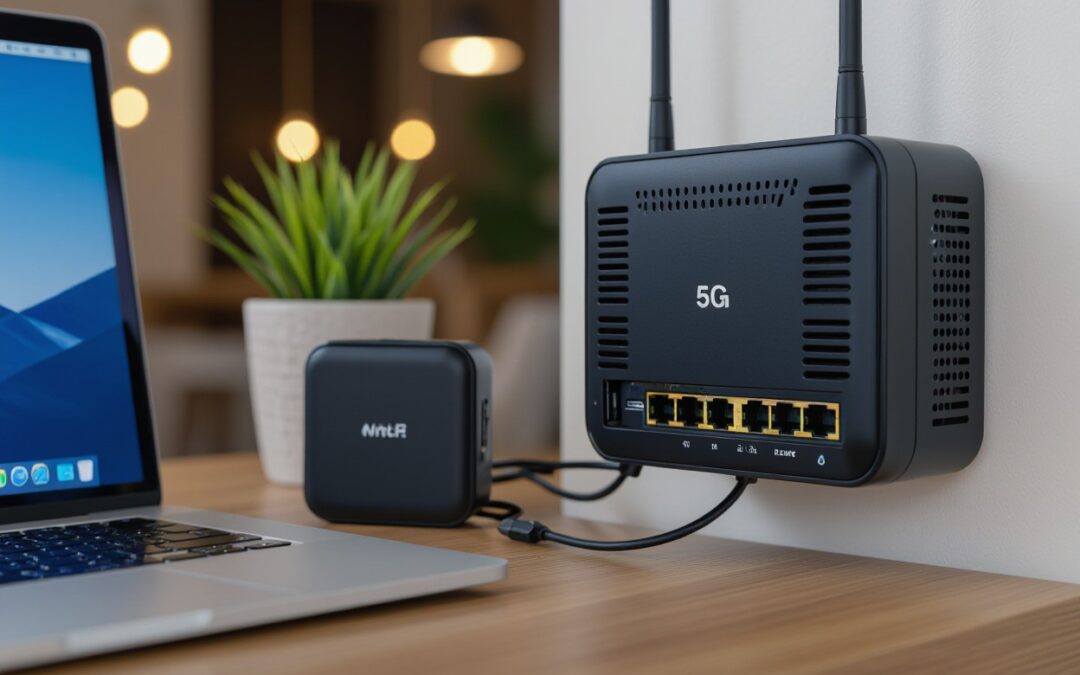
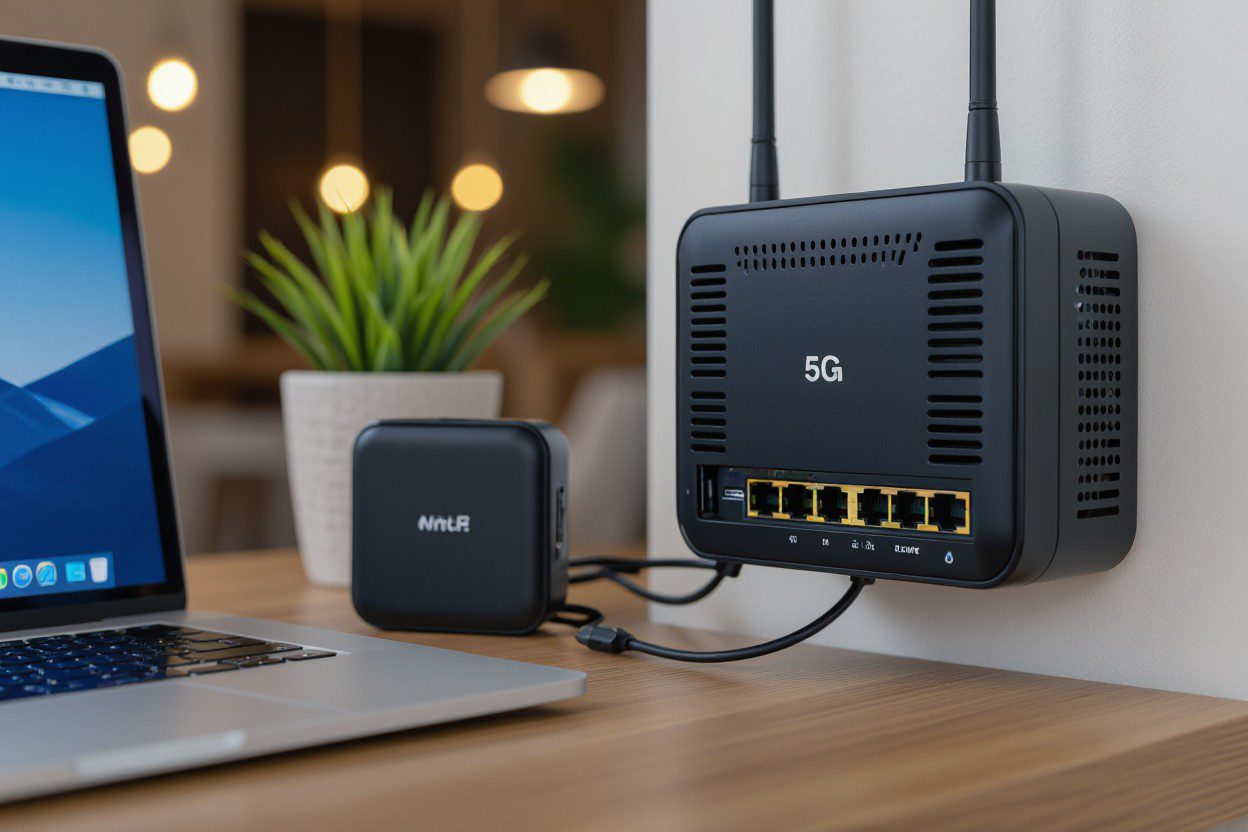
Wireless technology has transformed the way you connect and interact with your devices every day. Understanding wireless communications helps you grasp how information is transmitted without the need for cables, thereby improving convenience and mobility. As you explore the integration of various wireless communication devices, you’ll discover how they work together seamlessly to support your digital lifestyle. At Skylink Wifi, this insight allows us to provide you with the best solutions for the technology you use, optimizing your setup for better performance and reliability.


wireless communications and device integration overview mtv

The Invisible Framework: Anatomy of Wireless Communication

Behind every seamless connection between wireless communication devices lies a complex framework of invisible processes. Your data isn’t just floating in the air; it’s carried by carefully coordinated components, including antennas, transceivers, and digital signal processors. These parts work together to convert digital information into electromagnetic waves and back again, orchestrating the reliable flow of information without the need for physical wires. Understanding this framework helps you appreciate how your gadgets communicate effortlessly, even in crowded environments filled with competing signals and noise.

Signal Transmission: From Waves to Data

The journey from raw data to wireless transmission begins with modulation, where your device transforms digital bits into radio waves. Techniques such as Frequency Shift Keying (FSK) or Orthogonal Frequency Division Multiplexing (OFDM) shape these waves to carry multiple bits per signal efficiently. Upon reaching the receiver, demodulation extracts data from these waves, reconstructing the original message. You encounter these processes thousands of times a day, whether streaming video on Wi-Fi or making calls over cellular networks, each relying on advanced signal transmission methods to preserve clarity and speed.

Protocols and Standards: The Backbone of Connectivity

Wireless communication devices rely on standardized protocols to communicate using a common language across networks. For example, Bluetooth’s use of the IEEE 802.15.1 protocol allows different devices to pair and share data securely within short ranges. Meanwhile, Wi-Fi standards like IEEE 802.11ax (Wi-Fi 6) optimize throughput and reduce latency by managing how data packets are sent and received. These protocols define everything from frequency bands to error correction methods, enabling devices from different manufacturers to interact smoothly and reliably with one another.
These standards are continually evolving to meet growing demands for speed, security, and range. Take 5G NR (New Radio), the cellular protocol standard designed for next-level performance, which supports massive machine-type communications for IoT devices alongside enhanced mobile broadband. Implementation of these protocols also dictates power consumption, interference management, and spectrum efficiency. As a user, their seamless orchestration means you rarely worry about compatibility or connection quality, even as hundreds of devices compete on the same airwaves.


Bridging Devices: The Art of Integration

Wireless communications become truly powerful when multiple wireless devices work together seamlessly. Integration involves harmonizing protocols, synchronizing data streams, and ensuring consistent user experiences across platforms. You’ll find that building a network of interoperable devices requires not only hardware compatibility but also addressing concerns related to software, security, and latency. Solutions must adapt to varied environments, from home automation systems linking smart sensors to enterprise networks managing IoT devices. This integration transforms isolated gadgets into a cohesive ecosystem, enhancing productivity and user engagement.

Challenges in Cross-Device Compatibility

Cross-device compatibility often stumbles on differing standards and protocols. Devices from various manufacturers may employ Bluetooth, Wi-Fi, Zigbee, or proprietary protocols that don’t inherently sync. You might encounter issues like incompatible data formats, inconsistent signal ranges, or conflicting security policies. Even when devices support common wireless standards, firmware variations can cause communication barriers. These hurdles lead to increased complexity in managing your device network, making seamless integration a technical balancing act requiring careful planning and troubleshooting.

Solutions Through APIs and Middleware

APIs and middleware act as translators and coordinators between disparate wireless communication devices. You can leverage these software layers to abstract underlying hardware differences, standardize data exchange, and enable interoperability. Middleware platforms, such as MQTT brokers or RESTful APIs, facilitate real-time communication, device management, and data aggregation. Implementing these solutions can streamline integration workflows, reduce development time, and enable your devices to share intelligence effectively across different wireless protocols and systems.
Delving deeper, middleware frameworks such as Eclipse IoT or Azure IoT Hub provide extensive libraries and tools to connect diverse wireless devices without needing custom drivers for each one. These platforms manage device authentication, message queuing, and data translation, allowing you to focus on application logic rather than low-level connectivity. APIs also expose uniform interfaces to developers, promoting scalability and simplifying updates. By adopting such solutions, your wireless communication devices integrate more fluidly, offering resilience and adaptability in dynamic environments.


The Role of IoT: A Network of Networks

IoT acts as an expansive ecosystem where countless wireless communication devices connect to form a dynamic network of networks. This layered integration allows data from smart sensors, wearables, and home automation devices to interact seamlessly across different platforms. With billions of connected endpoints expected by 2025, the scalability and interoperability of IoT significantly enhance your ability to gather actionable insights, automate processes, and improve efficiency across various industries, including healthcare, manufacturing, and urban infrastructure.

Interconnected Devices: Revolutionizing Daily Life

Your daily routine benefits from interconnected devices that communicate over wireless protocols, such as Wi-Fi, Bluetooth, and Zigbee. Smart thermostats automatically adjust temperatures using environmental sensors, while wearable fitness trackers continuously monitor your health metrics. These devices transform ordinary objects into intelligent tools that anticipate needs and respond in real-time, ultimately delivering convenience, energy savings, and enhanced safety tailored to your lifestyle.

Security Risks and Mitigations in IoT

Security vulnerabilities inherent to wireless communication devices expose IoT networks to risks, including unauthorized access, data breaches, and device manipulation. Attack vectors include weak authentication, unencrypted transmissions, and outdated firmware, which hackers exploit to disrupt operations or steal sensitive information. Implementing robust encryption standards, regular software updates, and multi-factor authentication can significantly reduce these threats and protect your connected environments.
Delving deeper, IoT security challenges stem from the device diversity and network complexity, creating multiple attack surfaces. For example, the Mirai botnet in 2016 exploited poorly secured IoT devices to launch massive DDoS attacks, demonstrating the scale of potential damage. Effective mitigation strategies include adopting zero-trust architectures, segmenting networks to isolate critical systems, and continuous monitoring using anomaly detection algorithms. Your proactive approach combining these methods ensures the integrity and confidentiality of data transmitted across wireless communication devices in your IoT ecosystem.


The Future Landscape of Wireless Technology

Wireless communications are evolving rapidly, with smarter, faster wireless communication devices shaping how you connect and interact. Networks are becoming more adaptable, capable of handling a diverse range of applications, from IoT sensors to augmented reality. The integration of advanced hardware and software accelerates end-user experiences, reducing latency and boosting reliability. As this landscape evolves, expect seamless interoperability across multiple frequency bands, along with the emergence of novel protocols designed explicitly for massive device fleets and extreme data demands.

5G and Beyond: The Next Frontier

5G technology has set a new benchmark, delivering speeds up to 10 Gbps and ultra-low latency under 1ms, which transforms your wireless experience. Research into 6G is underway, focusing on terahertz frequencies that could push data rates to 1 Tbps with improved energy efficiency. These advancements promise enhanced mobile broadband, ultra-reliable low-latency communication, and massive machine-type communication, expanding use cases in autonomous driving, remote surgery, and immersive virtual reality.

Emerging Trends: AI and Edge Computing in Wireless

Artificial intelligence and edge computing are driving smarter wireless communication devices by processing data closer to your device, which reduces latency and frees up bandwidth. AI algorithms optimize network traffic, predict failures, and dynamically manage resources to enhance overall system performance. Together, they enable real-time analytics and adaptive protocol management, supporting applications such as real-time video analytics and autonomous systems with enhanced efficiency and responsiveness.
Delving deeper, AI integrated within wireless communication devices leverages machine learning models to continuously analyze network conditions, enabling predictive maintenance and self-optimizing networks. Edge computing complements this by distributing computational tasks to local nodes near data sources, minimizing reliance on centralized cloud servers. For instance, smart cities deploy edge-AI enabled wireless nodes to monitor traffic patterns and energy consumption in real time, adjusting signals and resources instantly. This synergy enhances your device’s ability to handle complex tasks locally, yielding faster decisions and reduced communication bottlenecks across dense networks.


wireless communications and device integration overview jqr

Practical Strategies for Effective Integration

Seamlessly merging wireless communications into your existing system demands a strategic approach tailored to the unique characteristics of wireless communication devices. Prioritize modular architecture to accommodate evolving standards like 5G or Wi-Fi 6. Optimize network protocols by selecting appropriate frequency bands and minimizing interference. Focus on power management to extend device lifespans, especially in IoT setups. These strategies enhance reliability while reducing latency and operational costs, enabling you to maximize your investment in wireless technology efficiently.

Best Practices for Development and Deployment

Use standardized communication protocols such as MQTT and CoAP to ensure interoperability among wireless communication devices. Design your applications with scalability in mind, allowing for future device additions without major rewrites. Implement security layers like AES encryption and mutual authentication during deployment to safeguard data in transit. Regularly update firmware over-the-air (OTA) to patch vulnerabilities, and document network topologies to streamline maintenance. Such standards-driven practice reduces risks and accelerates rollout.

Testing and Troubleshooting for Optimal Performance

Integrate continuous testing phases using simulation tools that mimic wireless signal conditions, such as multipath fading or interference, to identify weak points before full deployment. Employ spectrum analyzers and protocol analyzers to capture real-time data, helping you detect packet loss or latency spikes. Establish a detailed logging system for device metrics to aid in long-term troubleshooting. Quick identification and resolution of issues prevent downtime and maintain communication integrity.
Expanding on troubleshooting, you can leverage automated diagnostic frameworks to isolate faults within wireless communication devices systematically. For example, network emulators enable you to replicate complex environments, such as urban canyons or heavy industrial zones, where signals often degrade. Combining test results with machine learning algorithms provides predictive maintenance insights, highlighting devices that are at risk of failure. By pairing these tools with manual inspections, you can maintain a high-performance wireless network that adapts to evolving conditions.


Summing up

Drawing together what you’ve learned about wireless communications and device integration, you can see how these technologies work together seamlessly to keep your devices connected and efficient. Understanding wireless communication devices helps you appreciate the complexities behind signals, protocols, and interoperability. Armed with this knowledge, you can make better decisions when choosing, setting up, or troubleshooting your wireless systems, ensuring your network runs smoothly and meets your personal or professional needs with the support of Skylink Wifi.


FAQ on Wireless Communications and Device Integration
Q: What is wireless communications and why is it important?

A: Wireless communications refers to the transfer of information between two or more points without the use of physical wires or cables. It allows devices to connect and exchange data over radio waves, infrared, or other wireless technologies. This method is important because it provides flexibility, mobility, and ease of access for various applications, including mobile phones, Wi-Fi networks, and smart home devices.

Q: How do wireless communication devices work together in an integrated system?

A: Wireless communication devices work together by using compatible communication standards and protocols to send and receive data. Integration involves connecting various devices, such as sensors, smartphones, and access points, so they can communicate seamlessly. This interaction is often managed through centralized control systems or cloud services that coordinate data exchange to ensure smooth operation.

Q: What types of wireless communication devices are commonly used in modern technology?

A: Common wireless communication devices include smartphones, tablets, laptops, routers, Bluetooth headsets, smartwatches, and IoT sensors. Each device is designed to communicate using specific wireless standards like Wi-Fi, Bluetooth, Zigbee, or cellular networks (4G, 5G), enabling diverse applications from personal use to industrial automation.

Q: What challenges are involved in integrating wireless communication devices?

A: Challenges in integrating wireless communication devices include ensuring compatibility between different standards, managing interference from other wireless signals, maintaining secure connections to prevent unauthorized access, and optimizing battery life for portable devices. Addressing these issues requires careful planning of network design and the use of robust protocols.

Q: How is the future of wireless communications shaping device integration?

A: The future of wireless communications is moving toward faster, more reliable connections with technologies like 5G and Wi-Fi 6. These advancements will allow for better device integration by supporting higher data rates, lower latency, and increased device density. As a result, wireless communication devices will become more efficient and capable, enabling innovations such as smart cities, autonomous vehicles, and enhanced telemedicine.


Ready to experience the full potential of seamless wireless communications in your home or business? Skylink Wifi offers high-speed internet plans, including residential and business solutions, that leverage advanced wireless technology to provide reliable connectivity. Whether you’re in a rural area that needs robust satellite internet or a bustling city seeking optimized Wi-Fi 6, our services and products for on-the-go connectivity are designed to meet your needs. We serve a wide range of areas across the USA, ensuring you get the best internet experience.

Visit skylink-wifi.com or call us today to discover how our expertly integrated solutions can revolutionize your digital life!


Discover What is IoT Device Management: Ultimate Guide

How Do Cloud Communications Solutions Transform Business?

How Does IOT Product Development Solve Critical Issues?