
Wireless technology has transformed the way you connect and interact with your devices every day. Understanding wireless communications helps you grasp how information is transmitted without the need for cables, thereby improving convenience and mobility. As you explore the integration of various wireless communication devices, you’ll discover how they work together seamlessly to support your digital lifestyle. At Skylink Wifi, this insight allows us to provide you with the best solutions for the technology you use, optimizing your setup for better performance and reliability.

The Invisible Framework: Anatomy of Wireless Communication
Behind every seamless connection between wireless communication devices lies a complex framework of invisible processes. Your data isn’t just floating in the air; it’s carried by carefully coordinated components, including antennas, transceivers, and digital signal processors. These parts work together to convert digital information into electromagnetic waves and back again, orchestrating the reliable flow of information without the need for physical wires. Understanding this framework helps you appreciate how your gadgets communicate effortlessly, even in crowded environments filled with competing signals and noise.
Signal Transmission: From Waves to Data
The journey from raw data to wireless transmission begins with modulation, where your device transforms digital bits into radio waves. Techniques such as Frequency Shift Keying (FSK) or Orthogonal Frequency Division Multiplexing (OFDM) shape these waves to carry multiple bits per signal efficiently. Upon reaching the receiver, demodulation extracts data from these waves, reconstructing the original message. You encounter these processes thousands of times a day, whether streaming video on Wi-Fi or making calls over cellular networks, each relying on advanced signal transmission methods to preserve clarity and speed.
Protocols and Standards: The Backbone of Connectivity
Wireless communication devices rely on standardized protocols to communicate using a common language across networks. For example, Bluetooth’s use of the IEEE 802.15.1 protocol allows different devices to pair and share data securely within short ranges. Meanwhile, Wi-Fi standards like IEEE 802.11ax (Wi-Fi 6) optimize throughput and reduce latency by managing how data packets are sent and received. These protocols define everything from frequency bands to error correction methods, enabling devices from different manufacturers to interact smoothly and reliably with one another.
These standards are continually evolving to meet growing demands for speed, security, and range. Take 5G NR (New Radio), the cellular protocol standard designed for next-level performance, which supports massive machine-type communications for IoT devices alongside enhanced mobile broadband. Implementation of these protocols also dictates power consumption, interference management, and spectrum efficiency. As a user, their seamless orchestration means you rarely worry about compatibility or connection quality, even as hundreds of devices compete on the same airwaves.
Bridging Devices: The Art of Integration
Wireless communications become truly powerful when multiple wireless devices work together seamlessly. Integration involves harmonizing protocols, synchronizing data streams, and ensuring consistent user experiences across platforms. You’ll find that building a network of interoperable devices requires not only hardware compatibility but also addressing concerns related to software, security, and latency. Solutions must adapt to varied environments, from home automation systems linking smart sensors to enterprise networks managing IoT devices. This integration transforms isolated gadgets into a cohesive ecosystem, enhancing productivity and user engagement.
Challenges in Cross-Device Compatibility
Cross-device compatibility often stumbles on differing standards and protocols. Devices from various manufacturers may employ Bluetooth, Wi-Fi, Zigbee, or proprietary protocols that don’t inherently sync. You might encounter issues like incompatible data formats, inconsistent signal ranges, or conflicting security policies. Even when devices support common wireless standards, firmware variations can cause communication barriers. These hurdles lead to increased complexity in managing your device network, making seamless integration a technical balancing act requiring careful planning and troubleshooting.
Solutions Through APIs and Middleware
APIs and middleware act as translators and coordinators between disparate wireless communication devices. You can leverage these software layers to abstract underlying hardware differences, standardize data exchange, and enable interoperability. Middleware platforms, such as MQTT brokers or RESTful APIs, facilitate real-time communication, device management, and data aggregation. Implementing these solutions can streamline integration workflows, reduce development time, and enable your devices to share intelligence effectively across different wireless protocols and systems.
Delving deeper, middleware frameworks such as Eclipse IoT or Azure IoT Hub provide extensive libraries and tools to connect diverse wireless devices without needing custom drivers for each one. These platforms manage device authentication, message queuing, and data translation, allowing you to focus on application logic rather than low-level connectivity. APIs also expose uniform interfaces to developers, promoting scalability and simplifying updates. By adopting such solutions, your wireless communication devices integrate more fluidly, offering resilience and adaptability in dynamic environments.
The Role of IoT: A Network of Networks
IoT acts as an expansive ecosystem where countless wireless communication devices connect to form a dynamic network of networks. This layered integration allows data from smart sensors, wearables, and home automation devices to interact seamlessly across different platforms. With billions of connected endpoints expected by 2025, the scalability and interoperability of IoT significantly enhance your ability to gather actionable insights, automate processes, and improve efficiency across various industries, including healthcare, manufacturing, and urban infrastructure.
Interconnected Devices: Revolutionizing Daily Life
Your daily routine benefits from interconnected devices that communicate over wireless protocols, such as Wi-Fi, Bluetooth, and Zigbee. Smart thermostats automatically adjust temperatures using environmental sensors, while wearable fitness trackers continuously monitor your health metrics. These devices transform ordinary objects into intelligent tools that anticipate needs and respond in real-time, ultimately delivering convenience, energy savings, and enhanced safety tailored to your lifestyle.
Security Risks and Mitigations in IoT
Security vulnerabilities inherent to wireless communication devices expose IoT networks to risks, including unauthorized access, data breaches, and device manipulation. Attack vectors include weak authentication, unencrypted transmissions, and outdated firmware, which hackers exploit to disrupt operations or steal sensitive information. Implementing robust encryption standards, regular software updates, and multi-factor authentication can significantly reduce these threats and protect your connected environments.
Delving deeper, IoT security challenges stem from the device diversity and network complexity, creating multiple attack surfaces. For example, the Mirai botnet in 2016 exploited poorly secured IoT devices to launch massive DDoS attacks, demonstrating the scale of potential damage. Effective mitigation strategies include adopting zero-trust architectures, segmenting networks to isolate critical systems, and continuous monitoring using anomaly detection algorithms. Your proactive approach combining these methods ensures the integrity and confidentiality of data transmitted across wireless communication devices in your IoT ecosystem.
The Future Landscape of Wireless Technology
Wireless communications are evolving rapidly, with smarter, faster wireless communication devices shaping how you connect and interact. Networks are becoming more adaptable, capable of handling a diverse range of applications, from IoT sensors to augmented reality. The integration of advanced hardware and software accelerates end-user experiences, reducing latency and boosting reliability. As this landscape evolves, expect seamless interoperability across multiple frequency bands, along with the emergence of novel protocols designed explicitly for massive device fleets and extreme data demands.
5G and Beyond: The Next Frontier
5G technology has set a new benchmark, delivering speeds up to 10 Gbps and ultra-low latency under 1ms, which transforms your wireless experience. Research into 6G is underway, focusing on terahertz frequencies that could push data rates to 1 Tbps with improved energy efficiency. These advancements promise enhanced mobile broadband, ultra-reliable low-latency communication, and massive machine-type communication, expanding use cases in autonomous driving, remote surgery, and immersive virtual reality.
Emerging Trends: AI and Edge Computing in Wireless
Artificial intelligence and edge computing are driving smarter wireless communication devices by processing data closer to your device, which reduces latency and frees up bandwidth. AI algorithms optimize network traffic, predict failures, and dynamically manage resources to enhance overall system performance. Together, they enable real-time analytics and adaptive protocol management, supporting applications such as real-time video analytics and autonomous systems with enhanced efficiency and responsiveness.
Delving deeper, AI integrated within wireless communication devices leverages machine learning models to continuously analyze network conditions, enabling predictive maintenance and self-optimizing networks. Edge computing complements this by distributing computational tasks to local nodes near data sources, minimizing reliance on centralized cloud servers. For instance, smart cities deploy edge-AI enabled wireless nodes to monitor traffic patterns and energy consumption in real time, adjusting signals and resources instantly. This synergy enhances your device’s ability to handle complex tasks locally, yielding faster decisions and reduced communication bottlenecks across dense networks.
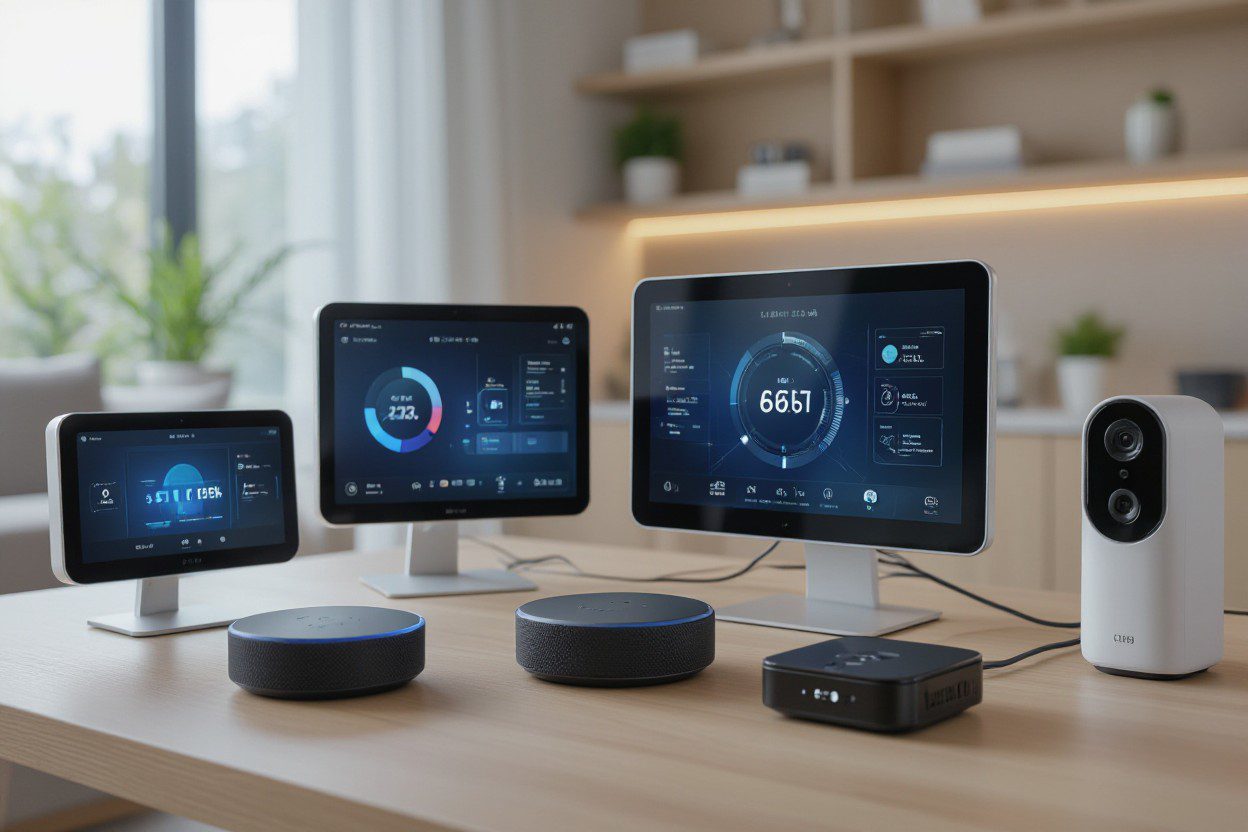
Practical Strategies for Effective Integration
Seamlessly merging wireless communications into your existing system demands a strategic approach tailored to the unique characteristics of wireless communication devices. Prioritize modular architecture to accommodate evolving standards like 5G or Wi-Fi 6. Optimize network protocols by selecting appropriate frequency bands and minimizing interference. Focus on power management to extend device lifespans, especially in IoT setups. These strategies enhance reliability while reducing latency and operational costs, enabling you to maximize your investment in wireless technology efficiently.
Best Practices for Development and Deployment
Use standardized communication protocols such as MQTT and CoAP to ensure interoperability among wireless communication devices. Design your applications with scalability in mind, allowing for future device additions without major rewrites. Implement security layers like AES encryption and mutual authentication during deployment to safeguard data in transit. Regularly update firmware over-the-air (OTA) to patch vulnerabilities, and document network topologies to streamline maintenance. Such standards-driven practice reduces risks and accelerates rollout.
Testing and Troubleshooting for Optimal Performance
Integrate continuous testing phases using simulation tools that mimic wireless signal conditions, such as multipath fading or interference, to identify weak points before full deployment. Employ spectrum analyzers and protocol analyzers to capture real-time data, helping you detect packet loss or latency spikes. Establish a detailed logging system for device metrics to aid in long-term troubleshooting. Quick identification and resolution of issues prevent downtime and maintain communication integrity.
Expanding on troubleshooting, you can leverage automated diagnostic frameworks to isolate faults within wireless communication devices systematically. For example, network emulators enable you to replicate complex environments, such as urban canyons or heavy industrial zones, where signals often degrade. Combining test results with machine learning algorithms provides predictive maintenance insights, highlighting devices that are at risk of failure. By pairing these tools with manual inspections, you can maintain a high-performance wireless network that adapts to evolving conditions.
Summing up
Drawing together what you’ve learned about wireless communications and device integration, you can see how these technologies work together seamlessly to keep your devices connected and efficient. Understanding wireless communication devices helps you appreciate the complexities behind signals, protocols, and interoperability. Armed with this knowledge, you can make better decisions when choosing, setting up, or troubleshooting your wireless systems, ensuring your network runs smoothly and meets your personal or professional needs with the support of Skylink Wifi.
FAQ on Wireless Communications and Device Integration
Q: What is wireless communications and why is it important?
A: Wireless communications refers to the transfer of information between two or more points without the use of physical wires or cables. It allows devices to connect and exchange data over radio waves, infrared, or other wireless technologies. This method is important because it provides flexibility, mobility, and ease of access for various applications, including mobile phones, Wi-Fi networks, and smart home devices.
Q: How do wireless communication devices work together in an integrated system?
A: Wireless communication devices work together by using compatible communication standards and protocols to send and receive data. Integration involves connecting various devices, such as sensors, smartphones, and access points, so they can communicate seamlessly. This interaction is often managed through centralized control systems or cloud services that coordinate data exchange to ensure smooth operation.
Q: What types of wireless communication devices are commonly used in modern technology?
A: Common wireless communication devices include smartphones, tablets, laptops, routers, Bluetooth headsets, smartwatches, and IoT sensors. Each device is designed to communicate using specific wireless standards like Wi-Fi, Bluetooth, Zigbee, or cellular networks (4G, 5G), enabling diverse applications from personal use to industrial automation.
Q: What challenges are involved in integrating wireless communication devices?
A: Challenges in integrating wireless communication devices include ensuring compatibility between different standards, managing interference from other wireless signals, maintaining secure connections to prevent unauthorized access, and optimizing battery life for portable devices. Addressing these issues requires careful planning of network design and the use of robust protocols.
Q: How is the future of wireless communications shaping device integration?
A: The future of wireless communications is moving toward faster, more reliable connections with technologies like 5G and Wi-Fi 6. These advancements will allow for better device integration by supporting higher data rates, lower latency, and increased device density. As a result, wireless communication devices will become more efficient and capable, enabling innovations such as smart cities, autonomous vehicles, and enhanced telemedicine.
Ready to experience the full potential of seamless wireless communications in your home or business? Skylink Wifi offers high-speed internet plans, including residential and business solutions, that leverage advanced wireless technology to provide reliable connectivity. Whether you’re in a rural area that needs robust satellite internet or a bustling city seeking optimized Wi-Fi 6, our services and products for on-the-go connectivity are designed to meet your needs. We serve a wide range of areas across the USA, ensuring you get the best internet experience.
Visit skylink-wifi.com or call us today to discover how our expertly integrated solutions can revolutionize your digital life!
Discover What is IoT Device Management: Ultimate Guide
How Do Cloud Communications Solutions Transform Business?
How Does IOT Product Development Solve Critical Issues?