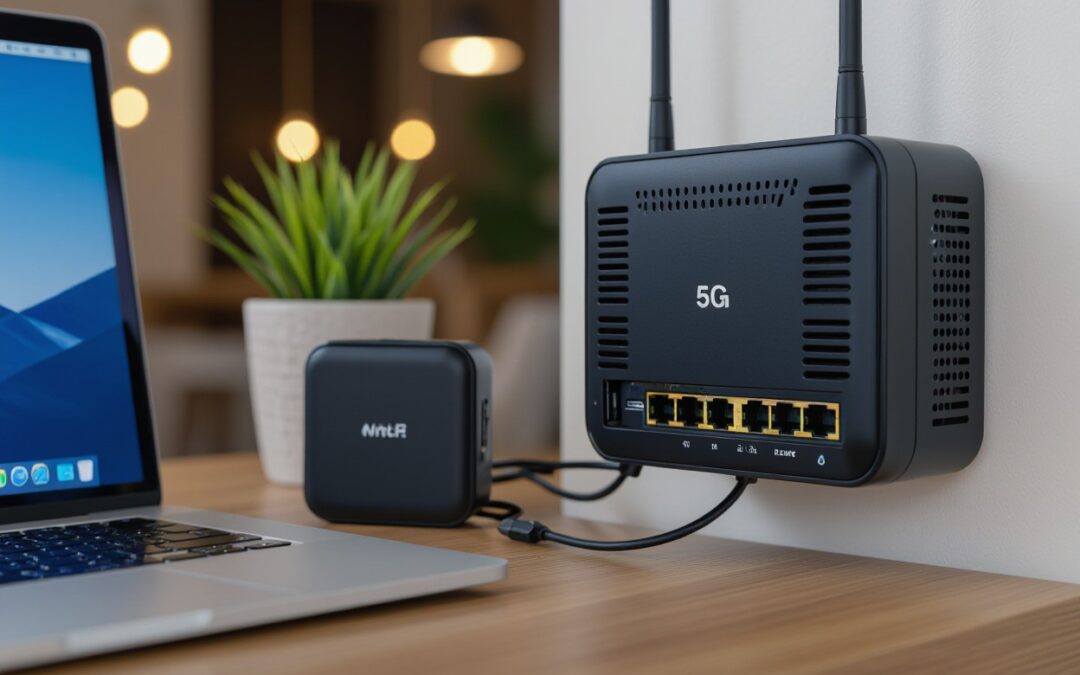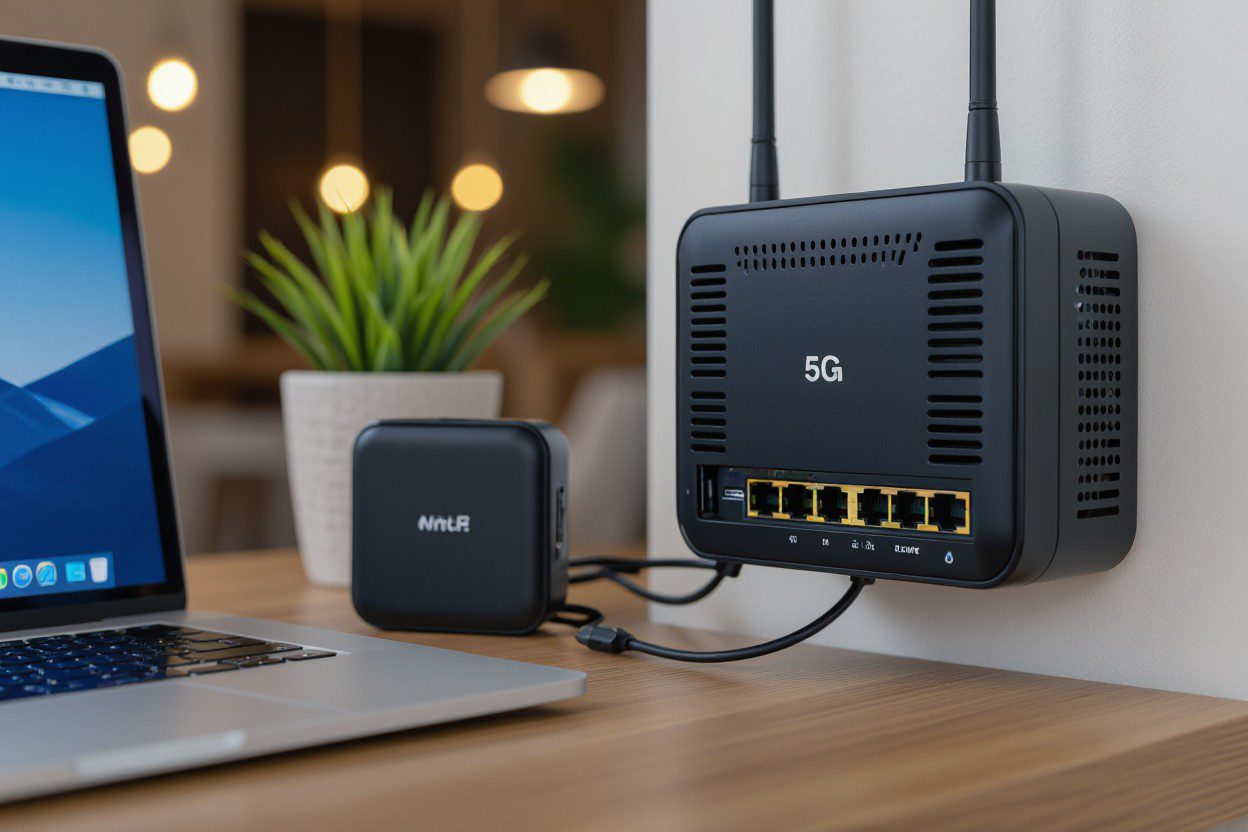

How Will LTE Technology Evolve with 5G? A Critical Look.

As the global demand for data and seamless connectivity continues to soar, the telecommunications landscape is on the cusp of a major transformation. The rollout of 5G, with its promise of lightning-fast speeds and ultra-low latency, is a hot topic, and it’s natural to wonder what this means for the existing and widespread LTE networks we all rely on. For a company like SkyLink WiFi, which is dedicated to providing reliable and cutting-edge internet services, understanding this evolution is not just a matter of staying current—it’s about ensuring a smooth, uninterrupted experience for our customers. You see, LTE technology won’t simply disappear; it will adapt, working in concert with 5G through a series of intelligent software upgrades, spectrum refarming, and infrastructure changes. This critical look will explore how LTE will continue to serve as a resilient backbone for your devices and services, and how the transition will ultimately enhance your connectivity in ways you may not expect.
The Anticipated Transition: LTE to 5G
Operators will phase 5G over existing LTE systems using Non-Standalone (NSA) 5G NR anchored to LTE before full Standalone (SA) cores arrive, so you’ll see phased rollouts and firmware-based feature upgrades. Verizon and AT&T utilized NSA early to accelerate coverage while preserving LTE technology’s resilience. Spectrum refarming and carrier aggregation keep legacy voice and fallback paths active as LTE technology evolves, allowing you to maintain service during multi-year transitions as capacity and low latency scale up.
Key Differences Between LTE and 5G
Peak throughput increases from hundreds of Mbps in LTE to multi-gigabit peaks in 5G, with typical latency decreasing from ~30–50 ms to single-digit milliseconds under 5G SA. Massive MIMO, beamforming, and mmWave (24–28 GHz) give 5G higher spectral efficiency, while LTE still delivers broader coverage and control-plane stability — you rely on LTE for mobility and wide-area service. That role means LTE technology remains the coverage backbone during rollout, and LTE network ties continue to support device handover as LTE technology gets upgraded.
The Technology Shift: Infrastructure and Frequency Changes
Dense small cells, fiber-rich backhaul, and disaggregated RANs (vRAN/C-RAN) become standard as gNodeBs are added alongside eNodeBs; mid-band around 3.5 GHz balances coverage and speed, while mmWave in 24–39 GHz delivers hotspot capacity. You’ll notice co-location to reuse towers, edge clouds to cut latency under 10 ms, and spectrum refarming that phases bands between systems, with LTE technology providing the control-plane handoff during early 5G overlays.
Open RAN trials and virtualization reduce vendor lock-in and capex, letting operators deploy dozens to hundreds of small cells per km² in dense urban areas while keeping macro LTE sites for rural reach; Dish and some global operators focused on SA show the spectrum and core model, but most carriers keep hybrid setups. You’ll see more software-driven upgrades to eNodeBs, enabling LTE technology to interoperate smoothly, and edge compute sites hosting 5GC will accelerate low-latency services for your apps.
Speed and Efficiency: The Next Level of Connectivity
Carrier upgrades and spectrum refarming will further enhance the performance of LTE technology. LTE-Advanced Pro features carrier aggregation and 256-QAM, pushing peak downlink rates from ~300 Mbps toward 1 Gbps in lab conditions. In contrast, real-world LTE network speeds typically range from 30 to 150 Mbps. You’ll notice efficiency gains as networks offload routine traffic to optimized LTE technology paths and reserve 5G slices for low-latency applications, keeping costs down while maintaining high coverage on your device.
The Potential for Enhanced Data Speeds
Carrier aggregation, Massive MIMO, and wider channel bandwidth enable sustained gains. Field tests show that aggregated LTE setups deliver consistent speeds of 100 Mbps or more in dense urban cells, while LTE-Advanced Pro demos achieve near 1 Gbps. You’ll get smoother 4K streams and faster uploads as LTE technology handles background bulk traffic and leaves 5G capacity for peak-demand services, improving perceived speed without wholesale spectrum reallocation.
How Latency Improvements Will Change User Experiences
Edge computing, shorter TTI, and faster HARQ cycles are reducing delays, allowing for real-time interactions to improve. The average LTE round-trip latency of around 30–50 ms can fall to single digits in optimized, edge-enabled deployments. That shift enables LTE technology to support tactile web applications—such as cloud gaming, AR overlays, and remote camera control—making experiences feel immediate, even before you transition entirely to 5G for sub-millisecond needs.
Shorter transmission intervals, localized packet breakout, and multi-access edge computing reduce queuing and core hops; operator pilots report latency of under 10 ms when edge servers are situated near base stations. You’ll see LTE technology powering low-latency factory control loops and telepresence trials, while 5G handles the strictest millisecond-class cases, creating a practical division of labor across your devices and apps.
Economic Impact: What LTE’s Evolution Means for Businesses
Rising data demands force you to rethink budgets, as migrating systems, licensing, and staff training all change as LTE technology matures alongside the development of 5G. Many enterprises can extend the life of existing gear through software upgrades, allowing LTE technology to do the same while piloting private 5G networks. Expect capital shifts from wide-area connectivity to edge compute and sensors; operators will monetize slices, and enterprises may buy dedicated cores. A well-planned shift reduces churn and preserves legacy links on the LTE network.
New Opportunities for Enterprises with 5G
Private wireless, AR-assisted field service, and dense IoT deployments open revenue streams. You can support robotics and real-time analytics with up to 1 million devices per km² on 5G, while using LTE technology for fallback and broad coverage. Retailers can deploy low-latency POS and cashierless stores; logistics firms can run AGVs and track pallets more precisely. Trials combining LTE and 5G stacks show measurable gains in throughput and operational flexibility.
The Cost-Benefit Analysis of Upgrading to 5G
Upgrading requires weighing CapEx and OpEx: a private 5G RAN can cost $50,000–$500,000 for a mid-sized campus, while devices add $50–$300 each. The expected payback ranges from 12 to 36 months, depending on the automation gains. Retaining LTE technology for non-critical links lowers immediate replacement costs and eases device rollouts. You should model reduced downtime, labor savings, and spectrum fees to see if the net present value justifies migration.
Consider spectrum and deployment models: using CBRS or shared spectrum in the US can significantly reduce initial spectrum costs, allowing you to pilot private 5G for tens of thousands rather than millions. Offloading bursty traffic to LTE technology reduces peak billing and eases QoS (Quality of Service) planning. Factor managed services, security upgrades, and training—these often make up 30–50% of total project costs. When you run scenario analyses with realistic throughput and device counts, the advantage of hybrid LTE technology/5G setups often becomes clear.
Societal Implications: Connecting Communities Like Never Before
As 5G rolls out, you’ll see LTE technology continue to underpin wide-area coverage while 5G handles hotspots and ultra-low-latency tasks. Operators refarm 3G bands and boost 700–2600 MHz LTE capacity so your phone keeps service where mmWave can’t reach. Typical round-trip latency drops from roughly 20–50 ms on LTE to 1–10 ms on many 5G links, but LTE technology still delivers reliable throughput for streaming and voice across vast regions.
Bridging the Digital Divide through Enhanced Coverage
Rural rollouts often rely on LTE technology to bring first-time broadband; you benefit when carriers use mid-band and low-band spectrum to cover tens of kilometers per cell. Project examples include rural refarming in parts of India and Europe where LTE towers extend internet to villages without fiber. The LTE network backbone reduces the cost per user, allowing you to access telehealth, remote education, and small-business tools before dense 5G layers arrive.
The Role of 5G in Smart Cities and Internet of Things (IoT)
High-density IoT demands push 5G for smart city cores, while legacy sensors and cameras will continue to use LTE for backhaul and wide-area links. 5G aims to support up to 1,000,000 devices per km² and offers network slicing and edge compute for sub-10 ms control loops; LTE technology will coexist to handle mobility and lower-band coverage, and you may see LTE technology used for vehicle telemetry and utility metering where battery life matters. Cities like Seoul and Singapore combine private 5G, fiber, and LTE to run traffic signals and public safety radios in parallel.
Edge nodes placed within 500 meters of intersections let you run AI for pedestrian detection at sub-50 ms decision time, and you’ll use 5G slices to isolate emergency services traffic while LTE provides a broad fallback. Private 5G in factories cuts control latency to 1–5 ms for robotics, yet lte technology remains vital for wide-area telemetry and as an economical backup across campuses and transport corridors.
Future-Proofing LTE Networks: Strategies for Transitioning
Operators should adopt software-defined upgrades, DSS, and edge computing to keep LTE technology relevant while 5G grows. Applying 3GPP Release 16 features and LTE-A Pro capabilities enables you to achieve higher throughput and lower latency for legacy devices. Using vRAN and containerized cores extends the lifespan of LTE technology without requiring forklift replacements, providing flexible and cost-effective paths to 5G coexistence.
Retrofitting Existing Infrastructure for 5G Compatibility
Start by retrofitting radio sites with Remote Radio Heads and fiber backhaul so your LTE network can host both LTE and 5G carriers; add mid-band radios that support DSS and upgrade EPC to a cloud-native core. You can reuse existing towers, antenna mounts, and power systems while enabling LTE technology features, such as carrier aggregation and LTE-M for IoT applications.
Best Practices for a Seamless Transition
Phase your migrations: pilot SA 5G at traffic hotspots while keeping most users on LTE, use spectrum refarming to free mid-band for 5G, and automate OSS with intent-based orchestration to manage coexistence. Test device fallbacks, update SIM profiles, and apply security patches; these steps help LTE technology and 5G interwork smoothly during multi-year transitions.
Operationally, benchmark KPIs—throughput, RAN latency, and handover success—are tracked, and trials are conducted with thousands of devices. Real pilots in 2020–2023 demonstrated that phased rollouts reduced service disruptions by 60%. Train field crews on vRAN swaps and utilize analytics to predict congestion, enabling you to scale radio capacity. Ensure LTE technology KPIs are tracked and monitor handset support for LTE technology features; emphasize software upgrades and open interfaces to make migration measurable and repeatable.
Summing up
Ultimately, you should expect a continuous, steady evolution where 5G and LTE technology coexist. LTE will remain a crucial component of our connected future, providing the wide-area coverage and resilient foundation that we’ve all come to depend on. It will continue to receive software updates and improvements to support lower latency and higher throughput, and it will intelligently offload heavy traffic to 5G for fast, demanding services. For a provider like SkyLink WiFi, this means we can leverage both technologies to deliver a comprehensive suite of internet services. The LTE network will remain the backbone for IoT, rural links, and voice, while 5G handles the data-intensive tasks of smart cities and advanced applications. This dual-pronged approach, supported by spectrum refarming and network tuning, ensures that your device and service plan will continue to evolve, providing the best possible blend of speed, reliability, and coverage.
FAQ
Q: How does 5G affect current LTE deployments?
A: 5G will add features like lower delay and larger capacity while working alongside LTE technology in many bands. Operators will use dynamic spectrum sharing, allowing LTE technology and 5G to coexist on the same spectrum, enabling providers to expand 5G without requiring the removal of existing radios.
Q: Will LTE be replaced by 5G?
A: No. LTE will continue to handle wide-area coverage, voice via VoLTE, and many IoT links. The LTE technology in millions of devices will be supported for years, and upgrades are often software-based, so networks can evolve gradually.
Q: What technical upgrades will LTE get to work with 5G devices?
A: Expect improvements like better carrier aggregation, MIMO enhancements, and faster backhaul. Features such as dual connectivity (EN-DC), improved QoS handling, and DSS are already letting LTE and 5G coordinate. These updates let lte technology share traffic and handovers smoothly with 5G radios.
Q: How will operators balance traffic and spectrum between the two systems?
A: Operators use tools like dynamic spectrum sharing, traffic steering, and virtualized RAN to allocate resources. Software updates also improve LTE technology radio coordination. The LTE network will often carry baseline connections while 5G handles high-speed or low-latency sessions. This mix reduces costs because operators can upgrade software and add small cells instead of full replacement. Network slicing and edge computing come into play for specialized services.
Q: What will users notice as LTE evolves with 5G?
A: Users will see steadier coverage, faster fallback speeds, and better battery life on some devices. Many apps will utilize 5G slices for high-quality connections while background tasks remain on LTE. IoT platforms will continue to use optimized LTE variants, such as NB-IoT, and enhancements to LTE technology will keep older devices functional while enabling new services, including remote control, AR, and more reliable video calls.
Ready to experience the future of connectivity? At SkyLink WiFi, we are at the forefront of this technological evolution, providing reliable and high-speed internet solutions for both residential and business customers. Our services, which include Fixed Wireless Internet, are designed to leverage the power of both LTE and 5G, ensuring you get the best possible connection whether you’re in the city or a more rural area. We offer seamless installation and a range of flexible plans tailored to your needs. From our cutting-edge router and antennas to our comprehensive network monitoring, we ensure your online experience is smooth and uninterrupted. Don’t get left behind in the transition to 5G.
Contact us today or visit our website to discover our products and find a plan that’s ideal for you. With SkyLink WiFi, your connection is always our priority.
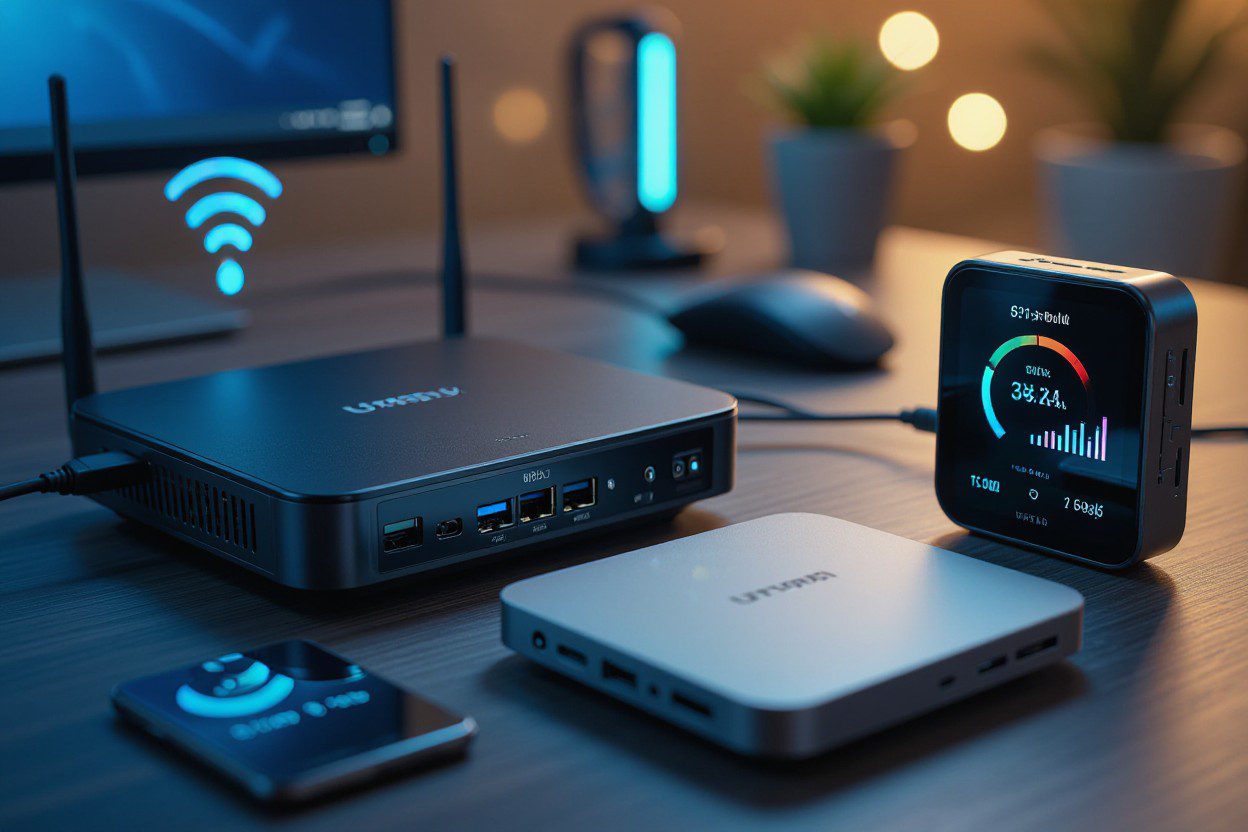
Technical Features of 5G WiFi Routers and Pocket WiFi Devices