
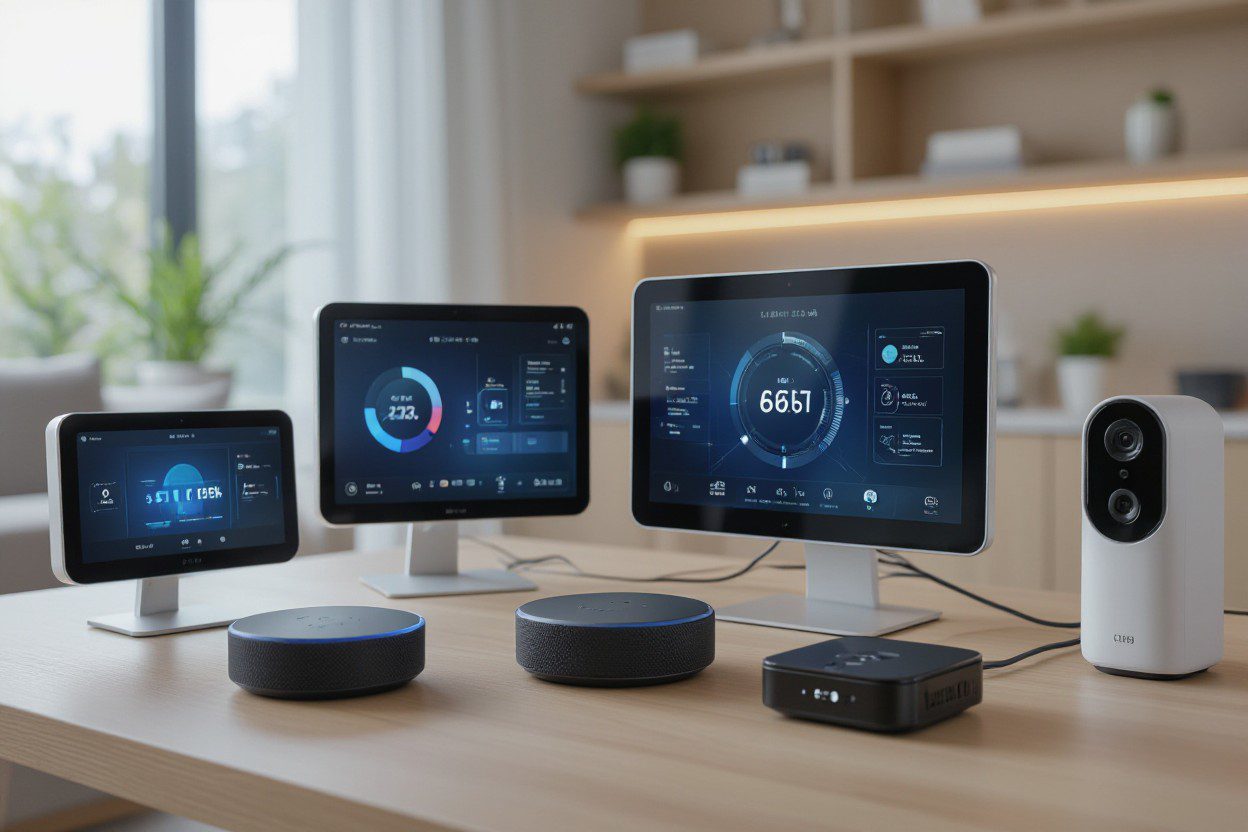
If you care about smart home convenience and reliable connectivity, you may wonder, What is an example of an IoT device? At SkyLink WiFi, using connected devices in your home should be simple, helpful, and smart. We will explain what counts as an IoT device, how they work, and why they matter to you.
What Does “IoT Device” Mean
IoT stands for “Internet of Things.” An IoT device is a physical device (hardware) that can connect to the internet (or to a network) and exchange data. These devices often have sensors or other technologies that let them collect real-time data, send it over the internet (or a local network), and sometimes react or be controlled remotely.
IoT devices are part of a larger IoT ecosystem (or IoT system), a network of connected devices working together through IoT technology and connectivity.
Everyday Examples of IoT Devices
Here are some common types of IoT devices many people already use, often without thinking about it:
- Smart home devices – including smart locks, smart lights, smart thermostats, and smart plugs.
- Security cameras – home security cameras that you can view on your phone, even when you are away.
- Wearable devices – this includes fitness trackers or smartwatches that monitor steps or heart rate.
- Temperature sensors – sensors that track room temperature or humidity and report it.
- Medical devices – devices that monitor health data (for example, heart rate or glucose levels) and then send updates to a cloud or an app.
- Industrial sensors – sensors used in machines or equipment to monitor status, send real-time data, and help with maintenance.
- Connected routers and gateways – devices that bring the internet to your home and help connect many IoT sensors, cameras, and smart devices.
These are examples of IoT devices that show how IoT touches many parts of our lives.
How IoT Devices Work: The Simple Flow
Here is how IoT devices typically operate, step by step:
- A device with sensors or hardware (such as a camera, wearable, or thermostat) collects data, for example, temperature, motion, health stats, or video.
- The device connects to the internet or network via WiFi, 4G/5G, or other connectivity.
- The device transmits the data to a cloud server, an app on your phone, or a central system.
- The data can then be viewed or acted upon; you might receive a notification, adjust settings, or trigger a process (such as turning on lights).
- Many IoT applications also use real-time data for quick responses or predictive maintenance in industrial settings, enabling issues to be spotted early.
This data exchange and connectivity are what make IoT such a powerful technology.
Why IoT Devices Matter for Homeowners
As a homeowner, IoT offers ways to make your home smarter, safer, and more efficient. For example:
- Smart home security – security cameras and smart locks let you keep an eye on your home, even when you are away.
- Better comfort and control – a smart thermostat adapts heating or cooling based on real-time data or your habits.
- Energy savings – sensors and automation can help reduce waste, for example, by turning off lights when no one’s home.
- Convenience – you can control devices from your smartphone, whether you are lounging on the couch or out of town.
- Health and wellness – wearable devices or connected medical devices can help you track health data and share it with doctors.
IoT devices make “connected living” real; they bring benefits once reserved for sci-fi stories.
How a Company like SkyLink WiFi Supports IoT at Home
At SkyLink WiFi, we not only offer home internet and connectivity solutions, we also help enable IoT solutions for your home or small business.
- Our 4G/5G routers and Pocket WiFi devices provide reliable connectivity, keeping IoT sensors, cameras, and smart devices online.
- Through our cloud communication platform, you can manage multiple connected devices, exchange data, and monitor device health, ideal for smart home setups or small business IoT deployments.
- We also offer customized device configurations and flexible data packages so that you can tailor your IoT setup to your home’s needs and usage patterns.
With local service based in Dallas, Texas, SkyLink WiFi is a trustworthy option for homeowners who want to harness the potential of IoT without complexity or heavy setup.
Common Types of IoT: From Simple to Advanced
IoT spans many types. Here are four common types of IoT setups:
- Consumer IoT – devices used at home by everyday people. These include smart thermostats, smart lights, smart locks, wearable devices, security cameras, and other smart home devices.
- Industrial IoT (IIoT) – sensors and connected devices used in factories or machinery to monitor equipment, track performance, and enable predictive maintenance.
- Healthcare IoT – medical devices and wearables that monitor health metrics, collect data, and help with remote care or health tracking.
- Enterprise/business IoT – connected devices used by businesses for data tracking, fleet management, smart building systems, asset tracking, and more.
These types show how many different kinds of devices use IoT technology, from the small to the complex.
What Is the Most Common IoT Device?
Among all these, the most common IoT devices are likely smart home devices, especially things like:
- Smart thermostats
- Security cameras and smart door locks
- Smart lights or smart plugs
- Wearables like smartwatches or fitness trackers
These devices are popular because they are affordable, easy to install, and useful for everyday life.
Are Many IoT Devices Safe and Secure? What About IoT Security?
Because IoT devices connect to the internet, security matters. Good IoT solutions take steps to protect device data and connectivity. Here are a few basic ideas for better safety:
- Use secure network connections (not open WiFi) for smart devices.
- Change the default device passwords and use strong, unique passwords.
- Keep device software updated.
- If you have many IoT devices on your home network, consider using separate networks or segments for them.
A trusted provider, like SkyLink WiFi, can help ensure that your connectivity, which supports all your smart devices, is stable and secure.
Real-World Use Cases of IoT Devices
Here are a few typical real-life scenarios where IoT devices shine:
- When you get home from work, your smart thermostat automatically changes the temperature based on your schedule.
- Your smart security camera sends you a live video or alert when someone approaches your front door.
- Your wearable device tracks your steps or sleep and sends data to an app that helps you monitor your health trends.
- In a small business or workshop, machine sensors alert you when maintenance is needed, helping you avoid costly breakdowns (predictive maintenance).
- A temperature and humidity sensor in a storage room monitors conditions. It sends alerts when values fall outside a safe range, useful for wine cellars, storage areas, or home offices.
These are practical examples of IoT applications that many homeowners or small business owners find helpful.
Final Thoughts: Why “What Is an Example of an IoT Device?” Matters
Understanding what counts as an IoT device helps you see how connected technology can improve everyday life. From simple smart home gadgets to more advanced sensors and wearables, IoT devices make homes safer, smarter, and more efficient.
If you want to build a smart home ecosystem or reliable connectivity to support many connected devices, SkyLink WiFi is a strong partner. We provide routers, connectivity, cloud platform support, and data plans, all designed to help IoT devices work smoothly and securely.
Frequently Asked Questions (FAQs)
1. What is the most common IoT device?
The most common IoT devices are smart home devices like smart thermostats, security cameras, smart lights, smart plugs, and wearables (fitness trackers and smartwatches). These are easy to get, affordable, and useful for everyday life.
2. What are the four types of IoT?
The four types of IoT are consumer IoT (home devices), industrial IoT (sensors for machines and predictive maintenance), healthcare IoT (medical devices and wearables), and enterprise/business IoT (asset tracking, building management, and business operations).
3. Can IoT devices collect real-time data?
Yes, many IoT devices collect real-time data. Sensors in devices, like temperature sensors or security cameras, gather data and transmit it over the internet or a network so users can monitor or respond immediately.
4. Do IoT devices need special internet connectivity?
IoT devices work best with stable internet connectivity, such as a reliable router or a 4G/5G network. If connectivity is weak or unstable, IoT devices may not transmit data properly or may lag.
5. Are IoT devices used only at home?
No. While many IoT devices are used in homes (smart devices, wearables), IoT is also widely used in industry (industrial internet of things), healthcare (medical devices), businesses (asset tracking, building management), and other fields.
6. How many IoT devices can a home network support?
It depends on your network quality. With a strong router and good internet plan, a typical modern home network, like what SkyLink WiFi offers, can support many IoT devices (security cameras, smart lights, sensors, wearables) without much trouble.
Ready to make your home smarter and more connected? Contact SkyLink WiFi today at (469) 972-4459. Whether you want a fast 4G/5G router, a flexible data plan, or IoT solutions for home automation, we have your connection needs covered. Visit our services and products page to learn more, or contact us and start using a truly connected home.
Also Read:
What is an IoT Device on My WiFi? (A Simple Guide to Understanding Your Smart Network)